
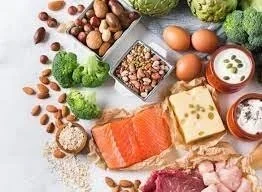
Protein energy malnutrition is a nutritional deficiency resulting from either inadequate energy (caloric) or protein intake and manifesting in either marasmus or kwashiorkor (World Health Organization, 2000).
Marasmus manifests from a dietary malnutrition that comes from calorie deficiency. Calorie deficiency is when the person consumes less calories than their body expends. Marasmus is caused by a complete total calorie insufficiency. The calorie insufficiency that causes Marasmus eventually leads to the loss of adipose tissue (commonly known as body fat) and muscle. It is commonly found in children in developing countries, as they are not able to get enough food into their body and thus they develop a protein energy malnutrition that may manifest into Marasmus. Some of the effects of Marasmus include: a weight-for-height value that is more than three standard deviations below the average age or sex, pitting edema, and marasmic-kwashiokor.
Kwashiorkor is similar to Marasmus as it comes from malnutrition and not enough consumption of protein or other essential vitamins and minerals. Some of the symptoms of Kwashiorkor are: loss of muscle mass, an enlarged tummy, regular infections, inflamed patches of skin that darken and peel and split open, failure to grow in height and much more. Kwashiorkor is very similar to Marasmus and they both seem to come from the same causes. To differentiate between the two you can also simply look at the causes. While they both come from malnutrition Kwashiorkor has a much bigger focus on the lack of proteins and essential vitamins and minerals while Marasmus is more about malnutrition as a whole. While Marasmus comes from a lack of calories, Kwashiorkor comes from the lack of one of the most important macronutrients, protein.
Malnutrition can also lead to death. Some of the main causes are: dehydration, heart failure, electrolyte imbalance, and infection. So how can doctors treat Malnutrition especially when they develop into Kwashiorkor or Marasmus? To treat Marasmus and malnutrition specifically, it is a careful process. There is a one week phase of resuscitation and stabilization for patients to be able to get back on their feet. Some of the biggest fears during this time are dehydration, infections, the electrolyte imbalance, and refeeding syndrome. The problem of dehydration can be treated with an intravenous isotonic solution, and if the child is suffering from hypovolemia (decreased volume of blood circulating in the body) plasma and blood may be used. The patient should be placed in a warm room and should watch out for any infections that might develop during this phase. One of the most important parts is feeding the patient 60-80% of the calorie requirement of the age to not develop refeeding syndrome in the child. This is one of the most important parts as it can lead to electrolyte imbalance and ultimately lead to death. After this phase, the child can slowly go back to a regular diet and have the gradual increase of caloric intake, vaccinations, and much more motor activity. This phase can last from two to six weeks. To prevent Kwashiorkor it is simply just providing more protein to the patient. To treat Kwashiorkor there might be antibiotics to treat infections and just like the treatment for Marasmus a gradual increase in the consumption of essential macronutrients.
Kwashiorkor and Marasmus are commonly found in developing countries and mostly target children. These two diseases are one of the most horrible things that can happen to a child. Because of the lack of milk in some of the developing countries and how meat is such an expensive commodity the lack of protein can very easily be developed. The only way to prevent such diseases is by fixing diet, and some of these countries simply lack the resources to do so. For example, in Uganda the production of milk is slowed down because of cattle disease and thus children can easily develop something like Kwashiorkor. These diseases are one of the most easily preventable yet painstaking things in the hearts of all. Only by slowly supporting developing countries that deal with malnutrition diseases can we finally see an end to it all.
Works Cited
Titi-Lartey, O. A. (2021, July 30). Marasmus. StatPearls [Internet]. Retrieved October 30, 2021, from https://www.ncbi.nlm.nih.gov/books/NBK559224/.
DEAN, R. F. (1953). Treatment and prevention of Kwashiorkor. Bulletin of the World Health Organization. Retrieved October 30, 2021, from https://www.ncbi.nlm.nih.gov/pmc/articles/PMC2542052/?page=12.
NHS. (n.d.). NHS choices. Retrieved October 30, 2021, from https://www.nhs.uk/conditions/kwashiorkor/.
Global burden of protein-energy malnutrition in the year 2000. (n.d.). Retrieved October 30, 2021, from https://www.who.int/healthinfo/statistics/bod_malnutrition.pdf.
