
Public Health Policies of 2021
Mental Health Support for Teens: What Parents (and Teens) Can Do
Adolescents today undergo a lot of pressure, including schoolwork, families, extracurricular activities, jobs, and a plethora of other matters at hand. As a result of the overbearing responsibilities, teens often develop symptoms of mental health disorders, such as depression, anxiety, and more. With the addition of the pandemic locking many of them behind a screen and away from friends and family, their mental health can deteriorate further and cause some day-to-day struggles to become even more unbearable. During such a hard time, it is vital that people are aware of mental health issues in adolescents, and properly support their growth to minimize the potential of disorder development. I have spoken with Laura Wenus on the ‘Civic’ podcast by the SF Public Press, along with other peers of Abraham Lincoln High School’s local Wellness Ambassadors program, about mental health support for teenagers, and here are some of the tips I would like to share with both parents and teens.
An important ground rule for all parents is to never downplay the risks of poor mental health of teenagers; they should not blame their source of relaxation as a major factor of their mental health. If parents see any abnormal behavior with their children, such as sudden mood swings, isolation, and weight or appetite changes, they should find an appropriate time to ask what is wrong and if they can do anything to help them out. If teenagers have their problems suppressed and are held accountable for any mental health issues, it might lead to unintended consequences. If parents cannot find any time to help their children, contacting outside resources, like finding a therapist or a psychologist, if conditions are severe, may provide assistance to struggling teens. Parents should always remember that it is their responsibility that they must uphold in order to provide the best childhood a teenager can get.
For teenagers, it is common to experience a high amount of stress. When encountering such high volumes of pressure, it is vital to remember to take a step back and allow yourself a chance to breathe. Find a new hobby, take time to socialize with friends, and don’t be afraid to seek help when you need it. Schools that have Wellness centers are a great place to destress, while reaching out to a therapist can provide someone who is willing to listen and give helpful feedback.
Oncoviruses: Epstein-Barr Virus and Burkitt Lymphoma
With COVID-19 spreading rapidly and forcing everyone to prevent the spread of the disease, there is no doubt that people clearly know what a virus is. One of the leading causes of death in many countries is cancer, and the disease claims hundreds and thousands of lives per year. Now begs the question - how are they correlated? The answer lies in the very dangerous oncovirus: a contagious microscopic host that can cause dangerous tumors.
One of these dangerous oncoviruses is the Epstein-Barr virus, otherwise known as EBV. This virus is responsible for causing a common and treatable disease known as mononucleosis, otherwise known as mono or kissing disease (due to its transmission through saliva). Mononucleosis causes fatigue and fevers, but can be easily treated with remedies like pain and fever reducing medicine and lots of rest. However, the virus is also known for attacking B lymphocytes, a key cell of the immune system’s battle against foreign diseases. It is able to latch onto a B cell’s receptor, a key component of the lymphocyte that allows entry into the cell, and take over the host by forcing the cell to read the host genome, replicate its proteins, and shut off other vital cell signals. As such, the virus has taken control of its cell host, and orders itself to stay inside to continually undergo rapid, uncontrolled cell division, causing the infected patient to develop a tumor.
The cancer the virus causes is known as Burkitt Lymphoma, named after the British surgeon Denis Burkitt. First discovered in 1956, the cancer was commonly found in children in Africa that suffered from malaria and mono. Patients with Burkitt Lymphoma, or BL, usually felt pain in their stomach, saw swollen lymph nodes, and experienced frequent vomiting. Upon further research, the Epstein-Barr virus was eventually linked to the cause of the deadly disease, as the virus’s surface glycoprotein was able to force entry into the CD21 receptor of the B-cell. Interestingly enough, the virus was also able to manually turn off one of its reproductive phases, the lytic cycle, which allowed it to stay dormant inside a cell and continue populating through cell division rather than just causing the cell to burst and spread more viral particles. In addition, patients with immunodeficiencies, including patients with HIV/AIDS, may have higher susceptibility to developing a tumor.
Despite how scary it sounds, there is still some positive news. Outside of Africa, Burkitt Lymphoma is very rare, occurring in less than 1,300 people per year in the United States. People who have experienced mono may have already developed immunity against the virus, and hence can lower the risk of contracting the disease and the lymphoma. Although no FDA-approved vaccine currently exists for the Epstein-Barr Virus, future development and testing may also help pave the way for research into viruses that can cause cancer, like the HPV vaccine for women in the battle against cervical cancer. Hopefully sometime in the near future, there will be solutions to these contagious killers, and perhaps even a remedy for cancer itself.
COVID-19 and the Delta Variant - What to be Cautious about
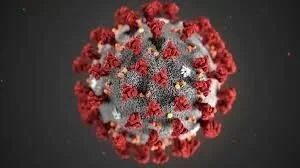
The rise of SARS-CoV-2, the coronavirus variant responsible for causing COVID-19, has plagued all nations worldwide, forcing many countries to shut down for over a year. Yet, despite all the hardships, many of the people had lowered the virus’s spread through vaccinations and shelter-in-place orders, which greatly reduced the infection rate of the dangerous virus. However, during the development of the vaccinations, many new mutations occurred in SARS-CoV-2, creating newer and more powerful variants of the virus. One of these is a concern to specifically the United States - the delta variant.
According to reports, the SARS-CoV-2 variant originated in India, where it spread rapidly among the Indian cities, to the extent that some hospital beds and oxygen tanks had to be shared between patients. The variant still infected patients with COVID-19, though it was able to spread more quickly among patients compared to the very first. This variant of the virus now accounts for almost 51.7% of all the cases in the United States, with a huge spike beginning on June 19th. Unfortunately, during this time, the United States was also beginning to reopen businesses, so transmission of the virus quickly blanketed the nation. Within a 2 week period till July 3rd, some Midwestern states, including Nebraska and Iowa, saw that the delta variant compose a staggering 80.7% of all its cases. Although the prominence of the delta variant in the United States causes extreme concern, states are still pushing to reopen businesses and reignite the economy, often removing mask mandate guidelines or loosening the restrictions.
However, America does not need to fear the new delta variant. Trials on Pfizer and Moderna, two of the newly created mRNA vaccines that are used to combat against the spread of COVID-19, showed effectiveness against the delta variant, meaning fully vaccinated individuals are well protected against the virus. Against recommendations, it is actually still advised to still wear a mask, especially if you are unvaccinated or entering indoors with huge crowds, as asymptomatic transfer of the virus can still occur to other individuals despite being fully vaccinated. For those that are still unvaccinated or only have 1 dose of the vaccine, avoid frequently going into public spaces with large crowds, and continue to practice pandemic regulations, including wearing a mask, washing your hands with soap for at least 20 seconds, and staying 6 feet or 2 meters apart from family and friends. With the coordinated effort of the American people, the delta variant can be easily crushed, and hopefully life will be able to return back in full swing.
References:
CDC. SARS-CoV-2 B.1.617.2 (Delta) Variant COVID-19 Outbreak Associated with a Gymnastics Facility — Oklahoma, April–May 2021. Atlanta, GA: US Department of Health and Human Services, CDC; 2021. https://www.cdc.gov/mmwr/volumes/70/wr/mm7028e2.htm
CDC. Reporting COVID-19 Vaccinations in the United States. Atlanta, GA: US Department of Health and Human Services, CDC; 2021. https://www.cdc.gov/coronavirus/2019-ncov/vaccines/reporting-vaccinations.html
