Viruses have the ability to change through mutations, and occasionally, these mutations can result in variants (viral genomes/genetic code) of these viruses. Variants can be classified into 3 groups, Variants of interest, Variants of concern, and variants of high concern. The most prominent variants of COVID-19 in our community include Delta and Omicron, both classified as variants of concern. Meaning both these variants are more transmissible then the original strain of Covid, more likely to cause severe hospitalization, aren’t affected by previous treatments and vaccines, and can fail to be detected by diagnostics at alarming rates. These variants also decrease the effect of antibodies, increasing the severity of the disease.
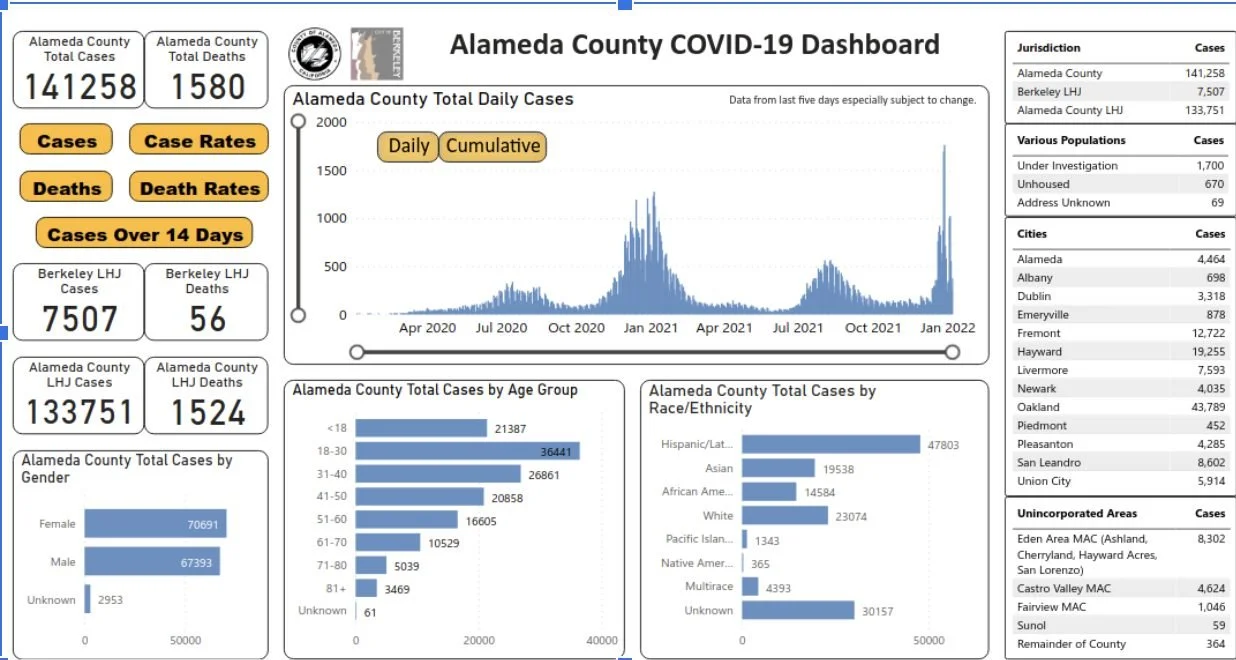
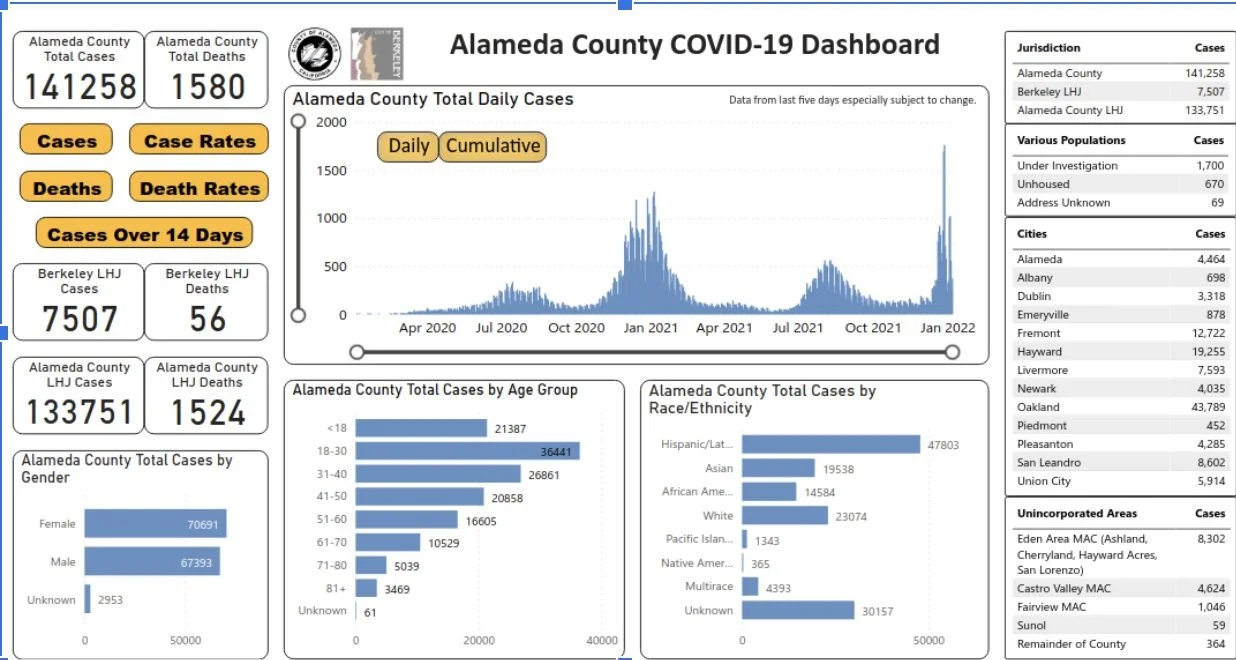
Recently, with the appearance of the Omicron Variant, the daily case count in Alameda County has increased by roughly eight times from what it was in early December, before Omicron had fully developed. The majority of cases are affecting the 18-30 age group, and those of Hispanic/Latino origin.
While all variants are consequential, and have induced surges throughout the ongoing pandemic, there are some noticeable differences between two main ones: Delta and Omicron. One being that the Omicron variant tends to have milder cases than the Delta variant. This allows the virus to prioritize contagion over severity as a way of increasing its population. Another difference is that breakthrough cases—where a vaccinated person contracts the illness— will be more frequent with the Omicron variant. This is why leaders want their populations to be both vaccinated and boosted when possible.
Both variants have slightly different symptoms. The Delta variant is more likely to cause pneumonia, while the Omicron variant usually does not get into the lung tissue, decreasing the chances of getting pneumonia. One main difference between the two variants is the age groups they affect. Young adults and teenagers are more likely at risk of getting the Delta variant while young children are more likely to have Covid complications due to Omicron. While Omicron does sound less serious than Delta, both variants are extremely contagious and one who receives either variant may encounter serious aftereffects.
In addition, as of January 6, 2022, the state of California has been receiving up to 43,697 cases daily on average. The rate of positive tests continues increasing now by 21.7%, and twelve schools in Oakland were forced to shut down due to staff shortages. Due to Omicron’s rapid spread over the holidays, many small businesses and schools are beginning to shut down affecting many students and staff members.
Delta and Omicron variants are of concern as they are more severe than other variants. Variants of concern (VOC), are variants that are highly contagious and have more severe infection. Variants of interest (VOI), are variants with specific genetic markers that are associated with changes to receptor binding, reduced effectiveness of treatments, and reduced neutralization by antibodies. Variants of High Concern (VOHC) are variants that have reduced prevention, are ineffective against vaccines, lead to a large number of infections, and have more severe cases. At the moment, there are no variants of interest or Variants of High Concern.
By facing and studying such variants, experts will gather and collect relative data. For example, data can help us learn about how the variant is spreading in the population, its severity, and how our communities are coping. These classifications and data will help the people in the medical field to gain knowledge and find countermeasures more accurately and quickly when more variance exists.
Noah, William, Ammy, Riya, Annie Zhang, Nikitha, Matthew, Zoe, Sana, Christina
Sources:
https://abc7news.com/timeline-of-coronavirus-us-covid-19-bay-area-sf/6047519/
https://covid-19.acgov.org/data.page?#geography
https://www.cdc.gov/coronavirus/2019-ncov/variants/omicron-variant.html
https://fortune.com/2022/01/07/omicron-delta-differences-transmission-symptoms-incubation/