
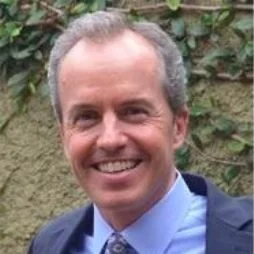
Curtis P. Langlotz, M.D Phd
From High School to Med School
Associate Chair for Information Systems, Department of Radiology (2014 - Present)
Director, Center for Artificial Intelligence in Medicine and Imaging (2018 - Present)
Medical Informatics Director for Radiology, Stanford Health Care (2014 - Present)
How was your High School experience?
"I attended a private school in Minnesota on scholarship. The kids there were quite different from me. I had also skipped kindergarten, so was a year younger than everyone else. I was an introvert and a nerd and my study habits weren’t that great. So I didn’t fit in very well. Overall it was a difficult experience. My biology teacher didn’t inspire me and I got a terrible grade so I figured medicine probably wasn’t for me. But I had a fantastic math teacher who introduced me to computers and a wonderful chemistry teacher. I thought I might be a chemistry major when I got to college. By some miracle, I got into Stanford. “
What fueled your passion for medicine?
" The ability to help others appealed to me, like most people interested in medicine. I also remember enjoying learning about anatomy from the clear plastic overlays in our Encyclopedia Britannica. But my original passion was for computers. I bought an expensive programmable calculator with paper route money. My school had a teletype connected by phone (at 112 bits per second) to a mainframe computer at the University of Minnesota. I remember writing a program that calculated where a projectile would land based on launch angle and velocity. In those days you could use the teletype to “print” your program in binary by punching holes in a paper tape. You rolled up the tape, put a rubber band around it, and stored it in your pocket. “
What did your Undergrad experience teach you?
" I explored a variety academic interests and discovered what intellectual pursuits I was passionate about. Unlike my high school, Stanford is a diverse place. So, I easily found others more like me. I also found that I liked to teach, and became a tutor and a teaching assistant. Learning to communicate is incredibly important in any job."
What advice would you give to aspiring doctors?
" Training to become a doctor is a long road, so be extra sure you want to do it before you start. There are many ways to get the rewards of medicine without the long training. For example, you can become a nurse, a physician’s assistant, a laboratory scientist, or an epidemiologist. When I was graduating from college, most of my friends were Pre-Med and applying to medical school. I wasn’t sure I wanted to be a primary care doctor, which is the only kind of doctor I knew. So I decided to do a master’s degree in computer science instead. In that program, I met a professor who did computer science research in medicine and immediately knew that was my passion."
Dr. Langlotz’s Education
Internship: Hospital of the University of Pennsylvania Primary CarePA
AB, Stanford University, Human Biology (1981)
MS, Stanford University, Computer Science: Artificial Intelligence (1983)
MD, Stanford University, Medicine (1989)
Medical Education: Stanford University, Medical School Registrar (1989) CA
PhD, Stanford University, Medical Information Sciences (1989)
Residency: Hospital of the University of Pennsylvania, Department of RadiologyPA
Board Certification: Diagnostic Radiology, American Board of Radiology (1994
Honors and Awards
Best Information Technology Company, New Jersey Technology Council (2001)
Fellow, American College of Medical Informatics (2008)
Fellow, Society for Imaging Informatics in Medicine (2010)
GERRAF Career Development Award, Association of University Radiologists (1993)
Lee B. Lusted Research Prize, Society for Medical Decision Making (1986)
Lifetime Achievement Award, Radiology Alliance for Health Services Research (2017
Publications
A THERAPY PLANNING ARCHITECTURE THAT COMBINES DECISION-THEORY AND ARTIFICIAL-INTELLIGENCE TECHNIQUES
Langlotz, C. P., Fagan, L. M., Tu, S. W., Sikic, B. I., & Shortliffe, E. H. (1987). A THERAPY PLANNING ARCHITECTURE THAT COMBINES DECISION-THEORY AND ARTIFICIAL-INTELLIGENCE TECHNIQUES. COMPUTERS AND BIOMEDICAL RESEARCH, 20(3), 279–303.
LOGICAL AND DECISION-THEORETIC METHODS FOR PLANNING UNDER UNCERTAINTY
Langlotz, C. P., & Shortliffe, E. H. (1989). LOGICAL AND DECISION-THEORETIC METHODS FOR PLANNING UNDER UNCERTAINTY. AI MAGAZINE, 10(1), 39–47.
Originally Published April 14, 2019
