
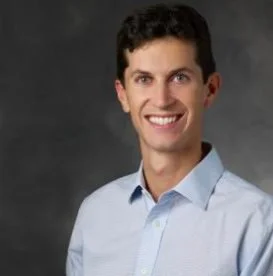
Thomas Caruso, M.D
From High School to Med School
Co-chair Type IV MOC Portfolio, Lucile Packard Children's Hospital (2017 - Present)
Co-chair Value Based Selection Committee, Lucile Packard Children's Hospital (2017 - Present)
Graduate Medical Education Faculty Adviser, Stanford University Department of Graduate Medical Education (2014 - Present)
Physician Lead for Perioperative Improvement, Lucile Packard Center for Quality and Clinical Effectiveness (2013 - Present)
How was High School for you?
“In High School I tried my best to be as involved in my extracurriculars as possible and maintain my grades. I think the difference between myself and others was that I genuinely loved participating in the activities I was involved in. Instead of participating solely for an application I was participating because I genuinely had a passion. I believe it’s imperative to develop a deep love for learning early on especially if you want to become a Doctor because throughout your medical journey you will be pushed to learn as much as possible.”
What fueled your passion for medicine?
“I had a strong interest in medicine since High School, when an unfortunate knee surgery put me in Physical Therapy. I still recall the doctors, nurses and patients I met there to this day, and several lessons I learned there are still with me. “
What did your undergraduate experience teach you?
“I believe the most important aspect of my undergraduate experience was the balance I learned to keep between the rigors of applying to Medical School and establishing healthy relationships. I strongly encourage those pursuing a Medical Degree to challenge yourself not only to excel in the classroom, but take the time to make healthy relationships with your peers and close friends as they are the ones who will come to support you throughout your journey.”
What advice do you have for aspiring Doctors?
“If I could give advice to you, I would tell you to consider your options. Ask why yourself why you want to become a Doctor in the first place. What is it you want to accomplish? Can you accomplish that in another way? If the answers to these questions don’t directly point to you becoming a Doctor, remember that Healthcare is a vast field filled with numerous opportunities such as Public Health, Nursing, etc. Otherwise, if you’re not easily motivated to participate and get work done, this isn’t the profession for you!”
Dr. Caruso’s Education:
Fellowship: Stanford University Pediatric Anesthesia Fellowship (2013) CA
Internship: Kaiser Permanente Santa Clara Internal Medicine Residency (2009) CA
Medical Education: Stanford University School of Medicine Registrar (2008) CA
M.Ed., Johns Hopkins School of Education, Masters Degree in Education for the Health Professional (2015)
Board Certification: Anesthesia, American Board of Anesthesiology (2013)
Board Certification: Pediatric Anesthesia, American Board of Anesthesiology (2013)
Residency: Massachusetts General Hospital (2012) MA
Bachelor of Science, University of Virginia, Chemistry with a subspecialty in Biochemistry (2004)
Dr. Caruso’s Publications:
Treatment of naturally acquired common colds with zinc: A structured review
Caruso, T. J., Prober, C. G., & Gwaltney, J. M. (2007). Treatment of naturally acquired common colds with zinc: A structured review. CLINICAL INFECTIOUS DISEASES, 45(5), 569–574.
Magnetic resonance Imaging detected renal volume reduction in refluxing and nonrefluxing kidneys
Chang, S. L., Caruso, T. J., & Shortliffe, L. D. (2007). Magnetic resonance Imaging detected renal volume reduction in refluxing and nonrefluxing kidneys. JOURNAL OF UROLOGY, 178(6), 2550–2554.
Treatment of the common cold with echinacea: A structured review
Caruso, T. J., & Gwaltney, J. M. (2005). Treatment of the common cold with echinacea: A structured review. CLINICAL INFECTIOUS DISEASES, 40(6), 807–810.
Images in clinical medicine. Severe vitamin D deficiency--rickets. Caruso, T. J., & Fuzaylov, G. (2013). Images in clinical medicine. Severe vitamin D deficiency--rickets. New England Journal of Medicine, 369(9).
Airway management of recovered pediatric patients with severe head and neck burns: a review Caruso, T. J., Janik, L. S., & Fuzaylov, G. (2012). Airway management of recovered pediatric patients with severe head and neck burns: a review. PEDIATRIC ANESTHESIA, 22(5), 462–468.
Dr Caruso’s Honors and Awards:
Alan M. Krensky Endowed Clinical Fellow, Lucile Packard Children's Hospital Stanford (2012-2013)
Originally Published March 28, 2019
