
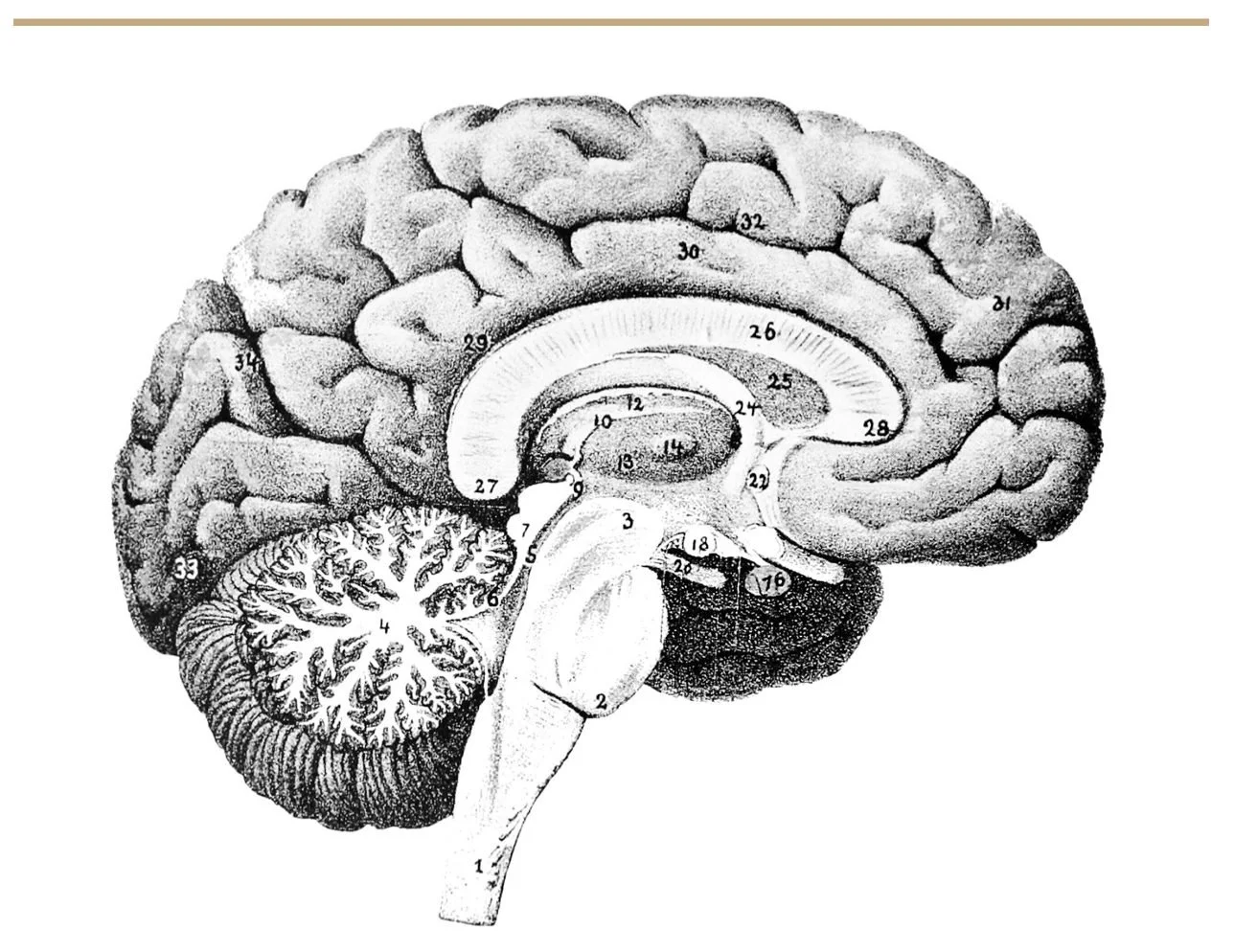
Parkinson’s disease (PD) is a progressive nervous system disorder that is currently incurable. PD affects the motor abilities of older patients over the age of 60. It is an especially devastating disease, slowly taking its toll on patients, progressively increasing obstacles in a patient’s life with inability to perform daily tasks. This can also take a large toll on relatives of patients when seeing these challenges their loved ones are going through, and being unable to offer any help. The physical aspects of this disease are often tremors, instability, loss of automatic response, bradykinesia (slowed movement), and rigid muscles and joints (Mayo Clinic, 2020). These symptoms are secondary to the disrupted processes of the brain that are caused by Parkinson's disease.
Neurological symptoms of Parkinson’s often include progressive damage to the neural transmission, decrease in dopamine levels, loss of nerve cells, and possibly Lewy bodies; which are recently being investigated as a possible cause of PD. Lewy bodies are protein clusters that can form inside brain cells, and are major red flags, due to the high correlation between the two. However, there is still no proof that they are a direct cause of Parkinson’s.
Neurons are responsible for sending and receiving nerve impulses and signals between the body and the brain (Mayfield Clinic et al., 2018). These are important in understanding Parkinson’s as the disease progressively severs these connections. A neuron will transmit its energy from an impulse or signal to those around it by crossing the synapse containing sacs that send the message to the dendrites of other neurons where their receptors receive this message (Mayfield Clinic et al., 2018). However, in a patient with Parkinson’s dopamine neurotransmitters often fail due to damaged connections between the neurons in the basal ganglia and substantia nigra caused by the lack of dopamine in the brain (Gilbert, 2018).
The basal ganglia and substantia nigra regions of the brain oversee dopamine production — an important neurotransmitter that is often related to movement. As these neural connections deteriorate, the body slowly loses function, eventually when 80% of the cells in the substantia nigra cease to function, physical symptoms such as tremors, bradykinesia, and stiffness occur. The body is operated by chains of long, complex decisions that interconnect with ganglia. A loss of connection at the basal ganglia will cause rigid or involuntary movements due to over or under stimulation of the basal ganglia (NHS, 2021). Those suffering from Parkinson’s have often adapted to produce higher levels of glutamate to replace dopamine. This is because the body maintains levels of acetylcholine which opposes dopamine in the body, and a lack of dopamine will cause overproduction of acetylcholine (Mayfield Clinic et al., 2018).
Lewy bodies are abnormal aggregation or clumping alpha-synuclein proteins that can be present in the brain in a range of neurologic diseases (Gilbert, 2018). Lewy bodies have different effects depending on their placement in the brain. For example, in the brainstem, Lewy bodies will affect bodily functions that are controlled by the brainstem such as hormone control, the digestive system, and sleep (Johns Hopkins, 2021). When Lewy bodies affect the substantia nigra (the part of the brain affected by Parkinson’s), which is located in the midbrain portion of the brainstem, irregular motor symptoms will often occur. This includes the tremor, slowness, and stiffness that often come with Parkinson’s. Lewy bodies additionally affect areas beyond the brainstem, including the cortex. In this occurrence, cognitive symptoms become apparent due to altering cognitive function in the presence of Lewy bodies (Gilbert, 2018). “Patients may experience difficulty with executive function (planning, ordering, multi-tasking), visuospatial function (navigating, constructing), and memory. A variety of other symptoms can be prominent including visual hallucinations, fluctuating levels of alertness, apathy, agitation, anxiety, and delusions,” (Gilbert, 2018).
There are over 10 million people in the world currently suffering from Parkinson’s disease (Statistics, n.d.). Between 60-80% of these have or will develop Parkinson’s disease dementia (Parkinson's Disease Dementia, 2021). Parkinson’s disease dementia is a type of dementia caused by increasingly severe symptoms of Parkinson’s disease. Another similar disease is dementia with Lewy bodies (DLB), which is a form of developing dementia that affects the ability to think, reason, and process basic information (Mayfield Clinic et al., 2018). Currently, with claims of Lewy bodies being one of the main causes of Parkinson’s, this makes dementia with Lewy Bodies the same prognosis.
Lewy bodies are mainly found in places of neuronal loss (Schulz-Schaeffer, 2010, 132). As dopamine levels go down with PD, with the deterioration of the substantia nigra, neurons begin to malfunction. Due to the nearly extinct levels of dopamine, the neurons in the brain made to support this neurotransmitter begin to deteriorate because of disuse (Gilbert, 2018). Lewy bodies are commonly found in patients with conditions that are related to the failure of neural transmission and the deterioration of neurons in the brain (Schulz-Schaeffer, 2010, 132). In patients who have a great amount of neuronal depletion or loss, you would tend to find a higher number of Lewy bodies (Schulz-Schaeffer, 2010, 133). This has led scientists to believe that Lewy bodies are connected or related to nerve cell loss. Thus, it shows that in regions of the brain heavily affected by the disease, in this case, Parkinson’s, neurons will often contain Lewy bodies that disrupt neural transmission and cause the symptoms that they face with this disease.
Parkinson’s disease is a complex disease with limited knowledge in the medical field. Many doctors and scientists are working on a solution for this disease. By making a clear connection and distinction between Lewy bodies and PD, it can help diagnose patients earlier, and specifically, target Lewy bodies in treatment as well as prevention. Overall, posing a method of eliminating them and finding a solution to this currently incurable disease.
Works Cited
Gilbert, R. (2018, May 15). Lewy Bodies, Dementia, and Parkinson's - What Does It All Mean? American Parkinson's Disease Association. https://www.apdaparkinson.org/article/understanding-parkinsons-disease-dementia-lewy-bodies/
Johns Hopkins. (2021). Parkinson's Disease and Dementia. Johns Hopkins. Retrieved October 14, 2021, from https://www.hopkinsmedicine.org/health/conditions-and-diseases/parkinsons-disease/parkinsons-disease-and-dementia
L-Dopa responsiveness in dementia with Lewy bodies, Parkinson disease with and without dementia. (2004). American Academy of Neurology, 1-4. Retrieved October 15, 2021, from https://sci-hub.st/https://n.neurology.org/content/63/2/376.short
Mayfield Clinic, Gartner, M., & Mandybur, G. (2018, April). Parkinson's Disease. Mayfield Clinic. http://www.mayfieldclinic.com/pe-pd.htm
Mayo Clinic. (2020, December 8). Parkinson’s disease - symptoms and causes. Mayo Clinic. https://www.mayoclinic.org/diseases-conditions/parkinsons-disease/symptoms-causes/syc-20376055
NHS. (2021, April 1). Parkinson's Disease. NHS. https://www.nhs.uk/conditions/parkinsons-disease/
Parkinson's Disease Dementia. (2021). Alzheimer's Association. https://www.alz.org/alzheimers-dementia/what-is-dementia/types-of-dementia/parkinson-s-disease-dementia
Schulz-Schaeffer, W. J. (2010). The synaptic pathology of α-synuclein aggregation in dementia with Lewy bodies, Parkinson’s disease and Parkinson’s disease dementia. Acta Neuropathologica, 120, 1-15. https://doi.org/10.1007/s00401-010-0711-0
Statistics. (n.d.). Parkinson's Foundation. Retrieved October 15, 2021, from https://www.parkinson.org/Understanding-Parkinsons/Statistics
