
Introduction
Neurology is a branch of medicine that deals with the study and treatment of nervous system disorders which affect the brain, spinal cord, and nerves. (Neurology at Highland Hospital) These disorders affect almost any aspect of daily life, from movement to function and thought. Some examples of neurological disorders are Parkinson’s, Alzheimer’s, and Lou Gehrig’s diseases. Some subspecialties of neurology include brain injury medicine, child neurology, clinical neurophysiology, endovascular surgical neuroradiology, neuromuscular medicine, pain medicine, and vascular neurology (Careers in Medicine). Note that neurology is different from psychology. While psychology is the study of the mind and behavior, neurology concerns the anatomy and physiology of the nervous system. (Mischel, W. 2017)
Key Concepts
The nervous system consists of two main parts: the central nervous system (CNS) and the peripheral nervous system (PNS). The central nervous system has the brain and spinal cord, and is the “base” of the nervous system. All nerve signals traveling throughout the body end up in the CNS, and the CNS also controls function, thought, movement, and sensation. On the other hand, the peripheral nervous system is made up of the nerves that branch off of the spinal cord and is found all around the body. The PNS detects stimuli and transports and carries out the signals sent from the CNS. (U.S. Department of Health and Human Services, 2018).
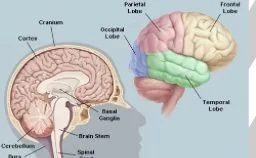
Going down one level of specificity from the central nervous system and the peripheral nervous system, one can study the organs of the nervous system. Let’s take a look at the CNS first. The brain is the main part of the central nervous system; it is the control center of the whole body. There are several main parts of the brain, each of which control specific functions. The first is the cortex, which is the outermost layer of brain cells and controls thinking and voluntary movement. The next part is the brain stem, the lowest part of the brain which bridges the rest of the brain with the spinal cord and controls basic functions such as breathing and sleep. In the middle of the brain are the basal ganglia, which coordinate messages between other brain areas. Another part is the cerebellum, towards the lower end of the brain, which is responsible for coordination and balance. The brain also consists of several lobes which concern different functions. The frontal lobe, which is in the anterior-most part, controls problem-solving, judgement, and motor function. The parietal lobe, posterior to the frontal lobe but on the top of the brain, concerns sensation, handwriting, and body position. Towards the bottom of the brain, the temporal lobe controls memory and hearing. Lastly, the most posterior lobe, the occipital lobe, contains the visual processing system. All of these parts are surrounded by layers of tissue called meninges and the cranium (skull) to protect the brain from injury.
The spine is the other large organ in the central nervous system. It runs from the top of the highest neck bone to the highest bone of the lower back, just below the rib cage, and it has thirty-one pairs of spinal nerves and roots. As an extension of the CNS, it is like the main terminal of an airport - nerve impulses travel to and from the brain through the spinal cord to reach a specific location in the body. Additionally, nerves branch off from the spinal cord to run throughout the body. If the spine is injured or diseased, then the affected person may experience loss of movement and sensation, which can be permanent.
Let’s travel down one more layer of specificity: cells. The two main types of cells in the nervous system are the glial cells and the neuron. Glial cells provide the framework of tissue which supports neurons and their activities. On the other hand, the more important neuron allows electrical impulses to travel throughout the body, allowing communication between different body parts. The neuron is made up of the soma, the main cell body, and has extensions called processes. The first type of process found in a neuron is an axon, which is found in bundles and allows communication. Axons are insulated by a lipid-rich substance called myelin, making up a long chain attached to the soma called the myelin sheath. Bundles of axons are referred to differently based on their position in the body. If a bundle of axons is in the CNS, it is called a tract. However, if it is in the PNS, a bundle of axons is called a nerve. Another type of process found in a neuron is a dendrite, which receives input from other neurons.
Diving Deeper
One common neurological disease is Alzheimer’s disease, which causes the brain to atrophy by damaging and killing brain cells. As the most common cause of dementia, 60 percent to 70 percent of people with dementia have Alzheimer’s. Around 5.8 million people in the US 65 years and older live with Alzheimer’s, and 80 percent of this number are 75 years old and older. (Mayo Clinic Staff, 2021)
There are several symptoms of Alzheimer’s Disease, mainly concerning memory loss, limiting mental capacity, and inability to perform functions. The first, main symptom is persistent and worsening memory loss, which includes the repetition of statements because the person forgot they said it, forgetting events and conversations that happened, misplacing common objects, getting lost in familiar places, forgetting names, and forgetting words. Another main symptom is difficulty concentrating and thinking, which consists of the lack of ability to make reasonable decisions, forgetting how to perform basic tasks, and not being able to perform calculations with abstract concepts, such as numbers. The last symptom is change in personality and behavior, which can include depression, apathy, social withdrawal, mood swings, distrust, irritability, change of sleeping habits, wandering, and delusions. (Mayo Clinic Staff, 2021)
Although the cause of Alzheimer’s is not fully understood, scientists have found that, at the cellular level, brain proteins fail to function normally, disrupting neurons and triggering a series of events which can cause neuron damage and eventually death. This failure to function normally can be caused by the abnormal build-up of proteins around brain cells. (NHS, 2021) One of the proteins that can cause Alzheimer’s with its buildup is the beta-amyloid protein, whose deposits can form plaques around brain cells and disrupt normal cell function. Another cause is tangles caused by tau proteins, which are caused by abnormal chemical changes which lead to the tau proteins disconnecting from microtubules and forming threads which block the neuron’s transport system and capability to communicate. The brain also commonly experiences chronic inflammation, which is caused by the buildup of glial cells, especially microglia and astrocytes, that are intended to keep the brain clean but fail to perform this necessary function and also release chemicals which cause the inflammation and damage neurons. This chronic inflammation may also be caused by a gene called TREM2 which also affects the microglia, and plaque build-up occurs when this gene does not function normally. (U.S. Department of Health and Human Services, 2017).
There are several risk factors for Alzheimer’s. Alzheimer’s is more common in people who are older and in people who have a family history of Alzheimer’s, since some genes play a role in causing Alzheimer’s. One such example is the Apolipoprotein E gene (APOE). Another risk factor is having Down syndrome, where someone can have three copies of a gene that leads to the creation of beta-amyloid. Mild cognitive impairment (MCI), a syndrome where an individual has cognitive decline greater than expected for their age and education level, is also a risk factor. (Gauthier et al., 2006) Another type of risk factor is having a poor lifestyle. This includes having a lack of exercise, poor sleep patterns, obesity, smoking, high blood pressure, high cholesterol, and not managing type 2 diabetes well. An additional risk factor is having low education levels and having a lack of intellectually and socially stimulating activities. Other risk factors include head trauma, air pollution, smoking, and excessive alcohol consumption. (Mayo Clinic Staff, 2021)
To diagnose Alzheimer’s, several tests may be used. The initial test may consist of a physical and neurological examination, which tests reflexes, muscle tone and strength, the ability to get up from a seated position and walk, sense of sight and hearing, coordination, and balance. Lab tests may also be performed, especially blood tests, to rule out other causes of memory loss and confusion, such as thyroid disorder or vitamin deficiencies. Physicians may also use a mental status test, which tests memory and thinking skills, or longer neuropsychological testing, which compares one’s mental function with the mental function of people of a similar age and education level. Another type of test that may be used is brain imaging, including MRIs, which look for brain shrinkage and ruling out other conditions, CT scans, which rule out tumors, strokes, and head injuries, and PET imaging. There are three types of PET tests which can be used in diagnosis of Alzheimer’s: fluorodeoxyglucose (FDG) PET, Amyloid, and Tau. FDG PET shows the areas of the brain with degeneration and low metabolism, and it distinguishes Alzheimer’s from other types of dementia. Amyloid and Tau look for their respective deposits, both of which are causes of Alzheimer’s. (Mayo Foundation for Medical Education and Research, 2021)
There are three main medicines which can be used to help treat Alzheimer’s and manage symptoms: cholinesterase inhibitors, memantine, and antidepressants. Cholinesterase inhibitors block the breakdown of acetylcholine and increase the levels and duration of acetylcholine in the nervous system. The lack of acetylcholine leads to Alzheimer’s. Common types of cholinesterase inhibitors are donepezil, galantamine, and rivastigmine. Side effects include diarrhea, nausea, loss of appetite and sleep disturbances. In people with certain heart disorders, serious side effects may include cardiac arrhythmia. Memantine consists of NMDA receptor antagonists which decrease abnormal activity in the brain. It may improve the ability to think and remember or slow the loss of these abilities. Some side effects are: dizziness, confusion, aggression, depression, headache, sleepiness, diarrhea, constipation, nausea, vomiting, and weight gain. Serious side effects include shortness of breath and hallucination. The last type of medicine is antidepressants, which can help control behavioral symptoms of Alzheimer’s.
Additionally, keeping the patient’s environment safe and supportive is extremely important. One action that would help achieve this type of environment is keeping things in the same place at home, to avoid confusion. Setting up automatic payment and deposit would be helpful, especially since the patient may have trouble with abstract concepts, such as numbers. Having regular appointments at the same day of the week and at the same time, tracking daily schedules, and checking off a to-do list also helps the patient avoid confusion. Additionally, keeping medications in a secure location and keeping track of dosages is needed to make sure the patient is safe and takes only their needed medication. Having the patient carry a location tracker, carry an ID, or wear a medical alert bracelet is important to make sure the patient is safe at all times. To be able to reach the patient at all times, one should input important phone numbers in their cell phone. In their living environment, sturdy handrails should be installed, mementos should be placed around the house, and all mirrors should be removed. These are some out of the many steps that can be taken to help ensure a safe environment for the patient.
APA Citations
Gauthier, S., Reisberg, B., Zaudig, M., Petersen, R. C., Ritchie, K., Broich, K., Belleville, S., Brodaty, H., Bennett, D., Chertkow, H., Cummings, J. L., de Leon, M., Feldman, H., Ganguli, M., Hampel, H., Scheltens, P., Tierney, M. C., Whitehouse, P., & Winblad, B. (2006). Mild cognitive impairment. The Lancet, 367(9518), 1262–1270. https://doi.org/10.1016/s0140-6736(06)68542-5
Mayo Clinic Staff. (2021, June 26). Alzheimer's disease. Mayo Clinic. Retrieved November 3, 2021, from https://www.mayoclinic.org/diseases-conditions/alzheimers-disease/symptoms-causes/syc-20350447.
Mayo Foundation for Medical Education and Research. (2021, June 26). Alzheimer's disease. Mayo Clinic. Retrieved November 3, 2021, from https://www.mayoclinic.org/diseases-conditions/alzheimers-disease/diagnosis-treatment/drc-20350453.
Mischel, W. (2017, November 9). Psychology. Encyclopædia Britannica. Retrieved November 4, 2021, from https://www.britannica.com/science/psychology.
Neurology at Highland Hospital. What is a Neurologist? - Neurology - Highland Hospital - University of Rochester Medical Center. (n.d.). Retrieved November 1, 2021, from https://www.urmc.rochester.edu/highland/departments-centers/neurology/what-is-a-neurologist.aspx.
Neurology. Careers in Medicine. (n.d.). Retrieved November 1, 2021, from https://www.aamc.org/cim/explore-options/specialty-profiles/neurology.
NHS. (2021, July 5). Causes - Alzheimer's disease. NHS choices. Retrieved November 3, 2021, from https://www.nhs.uk/conditions/alzheimers-disease/causes/.
U.S. Department of Health and Human Services. (2017, May 16). What happens to the brain in alzheimer's disease? National Institute on Aging. Retrieved November 3, 2021, from https://www.nia.nih.gov/health/what-happens-brain-alzheimers-disease.
U.S. Department of Health and Human Services. (2018, October 1). What are the parts of the nervous system? Eunice Kennedy Shriver National Institute of Child Health and Human Development. Retrieved November 2, 2021, from https://www.nichd.nih.gov/health/topics/neuro/conditioninfo/parts.
