

1. INTRODUCTION
Cardiovascular disease (CVD) is caused by a plethora of lifestyle, genetic, and environmental attributors. From the 2019 Update from the American Heart Association, the main factors that are correlated with CVD are smoking/tobacco use, physical inactivity, nutrition, obesity, high blood cholesterol, high blood pressure, diabetes mellitus, sleep, and genetic factors. Taking a closer look at these said factors reveals an even more interconnected relationship. With physical inactivity and overeating, for example, these factors contribute to a caloric surplus and obesity. Moreover, these key components contributing to CVD seem to be substantially related to the socio-economic status (SES) of a community and individual. Taking each element of CVD piece by piece illuminates on how the income level of a person can affect every level of cardiovascular health.
Firstly, tobacco usage is greater in areas of lower-income households. In families living below the U.S. poverty rate, people are more likely to smoke for twice as many years as those who are not (Siahpush et al., 2009). With a longer history of smoking, this means that lower income people are thus more prone to contracting CVD. They even develop it earlier on average, according to an analysis on national data in 2011 (Ham et al.). Moreover, lower-income communities are targeted by the tobacco industry with a greater density of tobacco retailers. In a 2010 study on the spatial regression of tobacco outlets (e.g. convenience stores, liquor stores), lower-income communities had a far larger number of places to access cigarettes and tobacco products (Yu et al.). This shows how people of a lower SES would be more prone to begin smoking earlier due to the high availability of these products and how long they continue to do so.
Patterns with a positive-feedback loop continue in lower income communities when it comes to obesity and the overweight community in the U.S. In a 2017 study by Chang and Kim, factors limiting physical inactivity in lower income communities included their home environment being unsafe and lower accessibility to parks, gyms, and recreational resources. Furthermore, participation in the Supplemental Nutrition Assistance Program (SNAP) was associated with less healthy household purchases, resulting in a steady increase of calorie consumption among those who used food stamps (Grummon & Taillie, 2017). Lower-income communities are more likely to be living in what are called “food deserts” where fresh produce is not immediately available and “food swamps” where fast-food chain restaurants outnumber the number of supermarkets (Hilmers et al., 2012). As high calorie and nutrient-deficient fast-food is more prevalent in lower-income communities, it may be first welcoming to think that the rapidly growing food industry is feeding more and more people -- but this just is not the case.
While this may be the case for destitute communities, families living under the poverty line in the United States face a different issue -- when the sole distributor of food are fast-food restaurants that provide for calorie-dense food with little to no nutritional content, people are more likely to become obese while still be malnourished (Zenk et al., 2010). The combination between physical inactivity and poor nutrition thus becomes a spiral into obesity. Even more so, healthcare expenses grapple lower income communities as a study estimated the mean annual per capita healthcare expenses associated with obesity were $1160 for males and $1525 for females (An, 2011; American Heart Association 2019). Meaning, as more lower income communities become more obese, more households are struggling to pay for the necessary health care needed to fight against obesity. If there is a lower availability of quality of healthcare, moreover, the problem becomes exacerbated (Patel et al., 2016). As a result, there is a heavier reliance on the cheap food provided by food swamps. And thus, more lower income people are more likely to contract obesity as they stay in these lower-income communities.
With a greater number of people with lower SES developing obesity, these communities become vulnerable to hypertension (high blood pressure), poor sleep, diabetes mellitus, and high blood cholesterol. Findings from a meta-analysis in 2015 were particularly pronounced for education and socioeconomic status, with a 2-fold higher rate of hypertension observed in lower- compared with higher-educated individuals (Leng et al., Kershaw et al., 2011). Less educated individuals are also associated with sleep apnea, a strong correlator with CVD (Beydoun et al., 2017). These evidence all point to the fact that a lower income community is less aware of how to combat these factors of CVD. This becomes clear when a study from 2011 shows how recognition of high LDL-C increased by 13.9% in 1999 to 2004; however, awareness did not increase further through 2009 to 2010 (Muntner et al.). Clearly, this pronounces the key problem: lower income communities are less likely to become aware of the problems that they are most vulnerable to.
While there may still be genetic factors that play into who becomes more susceptible to CVD, environmental, lifestyle, and socio-economic elements become key players in the development of metabolic syndrome in individuals. In this section, we find that there is a disproportionate distribution of cardiovascular disease among communities of lower income. Furthermore, it is important to note: as a direct result of CVD, cardiac arrests are dangerous and sudden cessation of a heart. Living with CVD, individuals are more likely to experience cardiac arrests which can become deadly if they continue for too long. During a prolonged cardiac arrest, the heart no longer delivers oxygen to the brain and ensues deadly consequences. Realizing that lower income communities are more likely to get CVD, it becomes essential to realize that lower income communities are more likely to experience cardiac arrests -- and to die from them (Rainier et al.. 2006). And even more prevalent to today’s current discussion, lower SES hampers CPR training to those who most need it.
2. THE PROBLEM WITH CPR
Comparing studies from the Cardiac Arrest Registry to Enhance Survival (CARES), findings showed that the number of out-of-hospital cardiac arrest, or OHCA, events have not decreased since 2005 to 2018 in the age range of 50 to 64. This means that there has either not been increased intervention against cardiac arrests in this age group, or the interventions given are not enough to stymie this complication. One of these said interventions is cardiopulmonary resuscitation (CPR). Bystander, layperson CPR has shown to be associated with a higher rate of survival from a cardiac arrest. In comparison to waiting to go to a hospital, layperson-initiated CPR increases the rate of survival from 12.4% to up to 43.6% (American Heart Association, 2019). While 43.6% is still not a desirable survival rate, it is ranked the highest in survival rates among lay AED, EMS treatment, and others (Resuscitation Outcomes Consortium, 2014). Meaning, CPR training should be looked for as a priority when trying to deal with the disparity among lower income communities. We find, however, people of a lower socio-economic status are less likely to be trained in CPR.
Figure 1. Cardiac Arrest Survival Rates
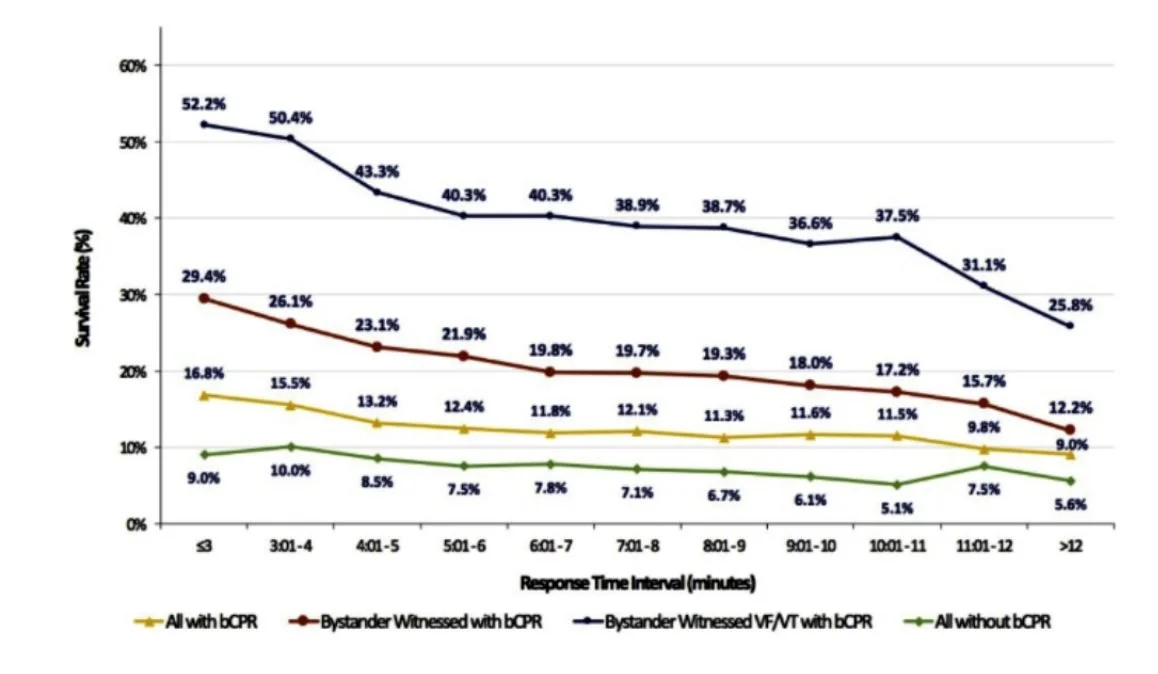
Figure 1. When a bystander witnesses a cardiac arrest and administers CPR, the rate of survival is higher. Source: Cardiac Arrest Registry to Enhance Survival 2018 Annual Report.
According to Selby, traditional CPR certification courses were already poorly targeted to communities with a smaller chance of cardiac arrests since 1982. Since then, only about three percent of the population gets trained in CPR annually (Graham et al., 2015). In 2017, a logistical regression model showed that among lower-income and less-educated communities, the likelihood of being trained was the lowest. Even more alarming, among the 9,022 participants, 24% of those under the USA poverty line of $11,770 per capita were never trained in CPR. Of the participants, 82% who had not been trained in CPR were below the San Francisco Bay Area 2017 poverty line ($82,200 per capita). We find this disproportion again when we find how likely people are willing to perform CPR in lower income communities. In 2014, a study found that laypeople are less likely to perform CPR in low-income black or Hispanic communities than in high-income white communities (Moon et al.). While low-income communities are more prone to more cardiac arrests, this is problematic when thinking of the efficiency of where CPR training is given. To solve this disparity, then, between communities of low SES and high SES, we must take a closer look at the factors contributing to where people are getting cardiac arrests, what they need, and how they need them.
In the Committee on the Treatment of Cardiac Arrest, they identify the four main barriers that a bystander faces during a out-of hospital cardiac arrest (OHCA):
-
An inability to recognize an OHCA followed by a delayed activation of EMS,
-
A lack of adequate CPR training,
-
Concerns about possible liability, and
-
Psychological factors, rescuer confusion, and health concerns.
Proper CPR training is able to alleviate these issues if it addresses how to recognize a cardiac arrest, how to respond, and how to deal with the consequences. If there are health concerns in doing mouth-to-mouth resuscitation, a study shows that continuous chest compressions (CCC) are effective enough to help a person receive enough oxygen until further emergency medical services are reached (Ewy, 2018). Meaning, spreading awareness of proper CPR and CCC procedures can increase the chances of bystanders for helping a OHCA situation. This is shown in a study from 2013 where being introduced to the idea of CPR resulted in sustained confidence to help others (Knight et al.). Thus, it becomes favorable to train people in CPR, but it also brings to question who to train. As the American Heart Association attests, “Given that four out of five cardiac arrests occur in at home, the people most likely to be on hand to provide immediate response to CPR are family members (AHA, 2015b; Swor et al., 2003; Waalewijn et al., 2001).”
Moreover, noticing that the majority of people who experience cardiac arrests in their life start from the ages 50 and up, it becomes necessary for younger family members, such as their children, to learn CPR. This proposal becomes even more clear the necessary quality that CPR needs to achieve before reaching efficiency. Chest compression depth, chest compression rate, and the duration of interruptions to compressions are key factors that play into the success of CPR (Cheskes et al., 2014; Idris et al., 2015; Kramer-Johansen et al., 2006; Stiell et al., 2014). Being able to provide suitable continuous chest compression requires for a person to be at least 13 years old (Aelen et al., 2013; Tomlinson et al., 2007). As a result, this points to the clear conclusion: it becomes favorable for lower income communities to teach middle and high school students how to perform CPR. That way, these students will be better prepared skill-wise and psychologically to handle situations if their family members were ever to experience cardiac arrest.
Figure 2. Percentage of Cardiac Arrest by Age
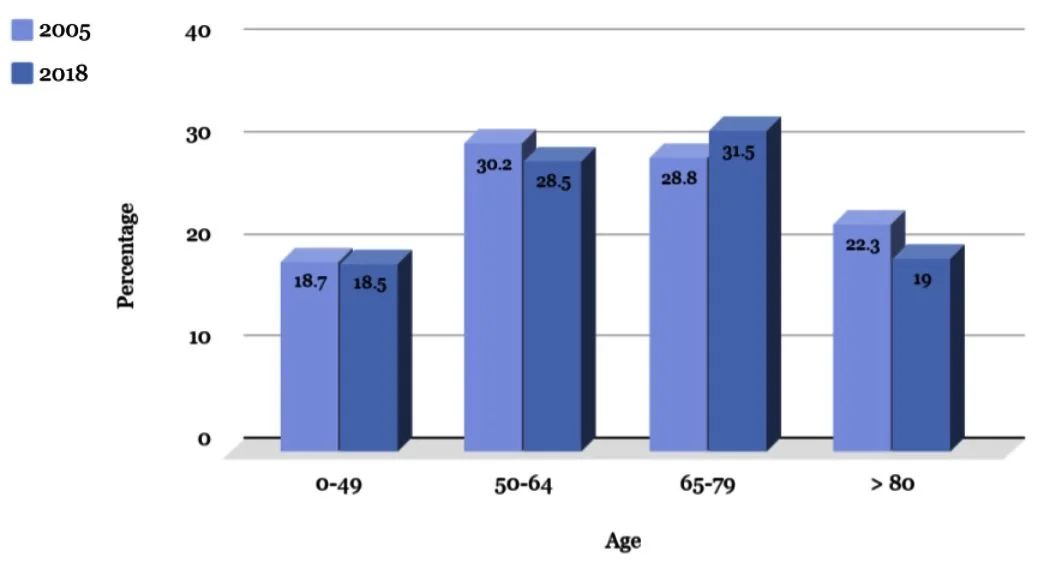
Figure 2. In comparison, the number of cardiac arrests that have occurred have not significantly decreased in the last years where the majority of cardiac arrests occur beginning the age 50. Source: Cardiac Arrest Registry to Enhance Survival (CARES) 2005-2010 and 2018 Annual Report
Potential benefits of training middle and high school students of low SES become countless. For one, training students of disadvantageous backgrounds gives them an equal chance of being able to apply for jobs that require prior knowledge. If these students were ever needed in an emergency situation, they would be just as capable as their higher-income counterparts. Moreover, equipping these students provides awareness for our next generation against CVD. Educating lower income communities about lifestyle changes and better decision making can become essential in the future when students age. Looking at how disadvantaged communities in the United States are to CVD, it should not be disappointing; rather, it should be seen as an opportunity to empower the current generation.
Citations
Aelen P, Paulussen I, Noordergraaf G, Woerlee P. Chest stiffness: Getting to a 6 cm compression depth expectation. Circulation. 2013;128(22):A123.
An R. Health care expenses in relation to obesity and smoking among U.S. adults by gender, race/ethnicity, and age group: 1998-2011.Public Health. 2015; 129:29–36. doi: 10.1016/j.puhe.2014.11.003
Anderson ML, Cox M, Al-Khatib SM, Nichol G, Thomas KL, Chan PS, Saha-Chaudhuri P, Fosbol EL, Eigel B, Clendenen B, Peterson ED. Rates of cardiopulmonary resuscitation training in the United States.JAMA Intern Med. 2014; 174:194–201. doi: 10.1001/jamainternmed.2013.11320
Beydoun HA, Beydoun MA, Chen X, Chang JJ, Gamaldo AA, Eid SM, Zonderman AB. Sex and age differences in the associations between sleep behaviors and all-cause mortality in older adults: results from the National Health and Nutrition Examination Surveys.Sleep Med. 2017; 36:141–151. doi: 10.1016/j.sleep.2017.05.006
Benjamin EJ, Muntner P, Alonso A, Bittencourt MS, Callaway CW, Carson AP, Chamberlain AM, Chang AR, Cheng S, Das SR, Delling FN, Djousse L, Elkind MSV, Ferguson JF, Fornage M, Jordan LC, Khan SS, Kissela BM, Knutson KL, Kwan TW, Lackland DT, Lewis TT, Lichtman JH, Longenecker CT, Loop MS, Lutsey PL, Martin SS, Matsushita K, Moran AE, Mussolino ME, O’Flaherty M, Pandey A, Perak AM, Rosamond WD, Roth GA, Sampson UKA, Satou GM, Schroeder EB, Shah SH, Spartano NL, Stokes A, Tirschwell DL, Tsao CW, Turakhia MP, VanWagner LB, Wilkins JT, Wong SS, Virani SS; on behalf of the American Heart Association Council on Epidemiology and Prevention Statistics Committee and Stroke Statistics Subcommittee. Heart disease and stroke statistics—2019 update: a report from the American Heart Association. Circulation. 2019;139:e56–e528. doi: 10.1161/CIR.0000000000000659.
Blewer AL IS, Leary M, Dutwin D, McNally B, Anderson ML, Morrison LJ, Aufderheide TA, Daya M, Idris A, Callaway CW, Kudenchuk PJ, Vilke GM, Abella BS. Cardiopulmonary resuscitation training disparities in the United States.Journal of Am Heart Assoc. 2017; 6:e006124. doi: 10.1161/JAHA.117.006124
Bucholz EM, Ma S, Normand SL, Krumholz HM. Race, socioeconomic status, and life expectancy after acute myocardial infarction. Circulation. 2015; 132:1338–1346. Doi: 10.1161/CIRCULATIONAHA.115.017009
Cardiac Arrest Registry to Enhance Survival 2018 Annual Report. https://mycares.net/sitepages/uploads/2019/2018_flipbook/index.html?page=1. Accessed April 13, 2020.
Chang S. & Kim K., A review of factors limiting physical activity among young children from low-income families. 2017. Published online. doi: 10.12965/jer.1735060.350
Cheskes S, Schmicker RH, Verbeek PR, Salcido DD, Brown SP, Brooks S, Menegazzi JJ, Vaillancourt C, Powell J, May S, Berg RA, Sell R, Idris A, Kampp M, Schmidt T, Christenson J. The impact of peri-shock pause on survival from out-of-hospital shockable cardiac arrest during the Resuscitation Outcomes Consortium primed trial. Resuscitation. 2014;85(3):336–342.
Committee on the Treatment of Cardiac Arrest: Current Status and Future Directions; Board on Health Sciences Policy; Institute of Medicine; Graham R, McCoy MA, Schultz AM, editors. Strategies to Improve Cardiac Arrest Survival: A Time to Act. Washington (DC): National Academies Press (US); 2015 Sep 29. 3, The Public Experience with Cardiac Arrest.Available from: https://www.ncbi.nlm.nih.gov/books/NBK321502/
Ewy GA. The mechanism of blood flow during chest compressions for cardiac arrest is probably influenced by the patient’s chest configuration. Acute Med. Surg. 2018;5:236–240. doi: 10.1002/ams2.336.
Grummon AH, Taillie LS. Nutritional profile of Supplemental Nutrition Assistance Program household food and beverage purchases.Am J Clin Nutr. 2017; 105:1433–1442. doi: 10.3945/ajcn.116.14717
Ham DC, Przybeck T, Strickland JR, Luke DA, Bierut LJ, Evanoff BA. Occupation and Workplace Policies Predict Smoking Behaviors: Analysis of National Data from the Current Population Survey external icon. Journal of Occupational and Environmental Medicine 2011;53(11):1337-45
Hilmers A., Hilmers D.C., Dave J. Neighborhood disparities in access to healthy foods and their effects on environmental justice. Am. J. Public Health. 2012;102:1644–1654. doi: 10.2105/AJPH.2012.300865.
Idris AH, Guffey D, Pepe PE, Brown SP, Brooks SC, Callaway CW, Christenson J, Davis DP, Daya MR, Gray R, Kudenchuk PJ, Larsen J, Lin S, Menegazzi JJ, Sheehan K, Sopko G, Stiell I, Nichol G, Aufderheide TP. Chest compression rates and survival following out-of-hospital cardiac arrest. Critical Care Medicine. 2015;43(4):840–848.
Kershaw KN, Diez Roux AV, Burgard SA, Lisabeth LD, Mujahid MS, Schulz AJ. Metropolitan-level racial residential segregation and black-white disparities in hypertension.Am J Epidemiol. 2011; 174:537–545. doi: 10.1093/aje/kwr116
Knight LJ, Wintch S, Nichols A, Arnolde V, Schroeder AR. Saving a life after discharge: CPR training for parents of high-risk children. Journal for Healthcare Quality. 2013;35(1):9–16. quiz 17.
Kramer-Johansen J, Myklebust H, Wik L, Fellows B, Svensson L, Sorebo H, Steen PA. Quality of out-of-hospital cardiopulmonary resuscitation with real time automated feedback: A prospective interventional study. Resuscitation. 2006;71(3):283–292.
Leng B, Jin Y, Li G, Chen L, Jin N. Socioeconomic status and hypertension: a meta-analysis.J Hypertens. 2015; 33:221–229. doi: 10.1097/HJH.0000000000000428
McNally, B., Robb R., Mehta M., Vellano K., Valderrama A., Yoon P., Sasson C., Crouch A., Perez A., Merritt R., Kellermann A. Out-of-Hospital Cardiac Arrest Surveillance --- Cardiac Arrest Registry to Enhance Survival (CARES), United States, October 1, 2005--December 31, 2010. National Center for Chronic Disease Prevention and Health Promotion. Published 2011.
Medical Expenditure Panel Survey: household component summary tables. Total expenditures in millions by condition, United States, 2014–2015. Agency for Healthcare Research and Quality website. https://meps.ahrq.gov/mepstrends/hc_cond/.
Moon S, Bobrow BJ, Vadeboncoeur TF, Kortuem W, Kisakye M, Sasson C, Stolz U, Spaite DW. Disparities in bystander CPR provision and survival from out-of-hospital cardiac arrest according to neighborhood ethnicity.Am J Emerg Med. 2014; 32:1041–1045. doi: 10.1016/j.ajem.2014.06.019
Muntner P, Levitan EB, Brown TM, Sharma P, Zhao H, Bittner V, Glasser S, Kilgore M, Yun H, Woolley JM, Farkouh ME, Rosenson RS. Trends in the prevalence, awareness, treatment and control of high low density lipoprotein-cholesterol among United States adults from 1999-2000 through 2009-2010.Am J Cardiol. 2013; 112:664–670. Doi: 10.1016/j.amjcard.2013.04.041Siahpush M, Singh GH, Jones PR, Timsina LR. Racial/Ethnic and Socioeconomic Variations in Duration of Smoking: Results from 2003, 2006 and 2007 Tobacco Use Supplement of the Current Population Survey external icon. Journal of Public Health 2009;32(2):210-8
Patel SA, Ali MK, Narayan KM, Mehta NK. County-level variation in cardiovascular disease mortality in the United States in 2009-2013: comparative assessment of contributing factors.Am J Epidemiol. 2016; 184:933–942. doi: 10.1093/aje/kww081
Reinier K, Stecker EC, Vickers C, et al. Incidence of sudden cardiac arrest is higher in areas of low socioeconomic status: a prospective two year study in a large United States community. Resuscitation. 2006 Aug;70(2):186-192. DOI: 10.1016/j.resuscitation.2005.11.018.
Reinier K, Thomas E, Andrusiek DL, Aufderheide TP, Brooks SC, Callaway CW, Pepe PE, Rea TD, Schmicker RH, Vaillancourt C, Chugh SS; Resuscitation Outcomes Consortium Investigators. Socioeconomic status and incidence of sudden cardiac arrest.CMAJ. 2011; 183:1705–1712. doi: 10.1503/cmaj.101512
Selby ML, Kautz JA, Moore TJ, Gombeski WR Jr., Ramirez AG, Farge EJ, Forthofer RN. Indicators of response to a mass media CPR recruitment campaign. American Journal of Public Health. 1982;72(9):1039–1042.
Stiell IG, Brown SP, Nichol G, Cheskes S, Vaillancourt C, Callaway CW, Morrison LJ, Christenson J, Aufderheide TP, Davis DP, Free C, Hostler D, Stouffer JA, Idris AH. What is the optimal chest compression depth during out-of-hospital cardiac arrest resuscitation of adult patients? Circulation. 2014;130(22):1962–1970.
Swor R, Jackson RE, Compton S, Domeier R, Zalenski R, Honeycutt L, Kuhn GJ, Frederiksen S, Pascual RG. Cardiac arrest in private locations: Different strategies are needed to improve outcome. Resuscitation. 2003;58(2):171–176.
Tomlinson AE, Nysaether J, Kramer-Johansen J, Steen PA, Dorph E. Compression force–depth relationship during out-of-hospital cardiopulmonary resuscitation. Resuscitation. 2007;72(3):364–370.
Waalewijn RA, Tijssen JG, Koster RW. Bystander initiated actions in out-of-hospital cardiopulmonary resuscitation: Results from the Amsterdam Resuscitation Study (ARRESUST). Resuscitation. 2001;50(3):273–279.
Xu JQ, Murphy SL, Kochanek KD, Arias E. Mortality in the United States, 2018. NCHS Data Brief, no 355. Hyattsville, MD: National Center for Health Statistics. 2020.
Yu D, Peterson NA, Sheffer MA, Reid RJ, Schneider JE. Tobacco Outlet Density and Demographics: Analysing the Relationships with a Spatial Regression Approach. Public Health, 2010;124(7):412–6
Zenk S. N., Schulz A. J., Odoms-Young A. M. How neighborhood environments contribute to obesity. The American Journal of Nursing. 2009;109(7):61–64. doi: 10.1097/01.naj.0000357175.86507.c8.
Zive, D. M., Schmicker, R., Daya, M., Kudenchuk, P., Nichol, G., Rittenberger, J. C., … Morrison, L. J. (2018). Survival and variability over time from out of hospital cardiac arrest across large geographically diverse communities participating in the Resuscitation Outcomes Consortium. Resuscitation, 131, 74–82. doi:10.1016/j.resuscitation.2018.07.023
