
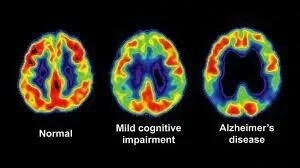
For years, humans have been using animal models, such as mice, pigs, and sheep, to test whether or not possible medications could treat humans. But if all animal models were accurate representations of humans, then we could have already cured cancer and Alzheimer’s disease years ago with our treatments in mice -- but the story is a little bit more complicated.
AD’s most enigmatic characteristics are the abnormal deposition of Amyloid Beta (Aβ)-containing senile plaques and hyperphosphorylated tau proteins.
Aβ Proteins
Many Aβ plaques are amyloids, misfolded and fibrous Aβ proteins. The function of Aβ proteins are unclear, because some animal studies have shown that the absence of these proteins do not actually have any physiological effect. However, other studies provide contradicting information that shows that the Aβ protein might be an antioxidant and antimicrobial substance responsible for the activation of enzymes, chemical transportation, and transcription. Aβ proteins are corresponded with cancer development, Down syndrome, and most notably, Alzheimer’s Disease.
Tau Proteins
Tau proteins are a group of six protein isoforms from the gene MAPT (microtubule-associated protein). Isoforms are variants of a protein produced by a single gene, in this case MAPT through alternative splicing. Tau proteins are important in neurons and the central nervous system because they translate mRNA to proteins and maintain the stability of the axonal microtubules, which are critical in the structures of axons and transportation of neurotransmitters. The tau hypothesis states that hyperphosphorylated tau proteins (HPTs) results in them clumping together as paired-helical-filament (PHF) tau and neurofibrillary tangles (NFTs), impeding normal mitosis, causing cancer, Alzheimer’s disease (AD), and other tauopathies.
The study of Aβ proteins has been prominent in AD research, especially in its precursor, amyloid precursor protein (APP). Additionally, a substrate called Notch has been studied because it selectively inhibits only APP cleavage and is correlated with the production of Aβ proteins. It is hypothesized that APP is involved in trafficking and cell signalling, cell migration, neuronal calcium and iron homeostasis, and synaptic transmission (Duce et al., 2010; Adyin et al., 2012; Rice et al., 2012; Octave et al., 2013).
Many researchers have been trying to treat Alzheimer’s disease by reducing amyloidosis and tau pathologies by testing and treating them in mice. However, as Franco and Cedazo-Minguez argue, there are many other factors that we must consider when trying to treat AD as well as other neurological disorders (2014). In humans, there are only two types of drugs approved to treat symptoms of AD, inhibitors and modulators of N-methyl-d-aspartate (NMDA) receptors. However, in animals, there have been many more successful trials to cure AD, which brings into question how mice can be cured of AD, but not humans, and why our current solutions are not working.
Aβ Proteins: Success In Mice, Not In Humans
Scientists have been successful in removing the Aβ protein through knocking out the genes of its precursor, APP, which have led to a decrease in Aβ pathology as well as AD symptoms (Nagata et al., 2018). However, human clinical trials targeting Aβ proteins have been generally unsuccessful. This is because there are still ethical issues with knocking out genes in humans in-utero in order to test whether or not the absence of the Aβ protein in babies will actually affect them when they get older; additionally, it would take a very long time to be able to test this result. As a result, researchers have been moving onto clearing out the Aβ protein, such as the Alzheimer’s Prevention Initiative (API) and the Dominantly Inherited Alzheimer Network (DIAN). However, with current research, it seems that Aβ depositions only occur in the later stages of AD, so they have moved on to the next characteristic of AD: tau pathologies.
Tau Proteins: Success In Mice, Not In Humans
Tau proteins have been researched thoroughly because they are more common in actual AD patients, while we may only observe correlated genes for the Aβ protein instead. The link between these two proteins still remains unsolved, and there needs to be more research on the chemical interactions between them and with other cells and chemicals. We do know, however, that tau proteins are found a lot in interneuronal tangles and AD progression, as well as fronto-temporal dementia (FTD; Goedert & Jakes, 2005). The chemical structure of tau proteins has been more researched, and it can be seen that many tau proteins begin to deform and misfold when they are hyperphosphorylated.
Some researchers want to change kinases which give phosphate groups to proteins and change their structures, but there are many different kinases to choose from (Schneider and Mandelkow, 2008). Others want to reduce hyperphosphorylation through taking phosphate groups from the tangles using phosphatases themselves (Corcoran et al., 2010). While all these seem very plausible, many of these treatments are still in clinical trial format, and there is still not enough research on why these proteins misform in the first place and how to target kinases and phosphatases to directly treat AD.
Perhaps there can be more research on how to prevent AD instead of treating it. The first human clinical trial for an anti-tau immunization had been started in 2013 with 30 mild-to-moderate Alzheimer’s disease patients participants in its first phase, and then another in 2014 to study its effects on the immune system. The team did notice that in many patients, there was an increased number of IgG antibodies; however, there were common adverse events in response to the vaccine, which begets more research done on the vaccine. Overall, for vaccination studies, there needs to be more research in other areas as this research is being done because it is time consuming, and it is hard to tell whether or not a vaccine actually prevents one’s susceptibility or not over a long period of time.
In animals, there have been studies after studies on how certain anti-amyloid treatments can decrease Aβ proteins and treat AD in mice, anti-tau treatments that decrease phosphorylation in the NFTs, and anti-diabetic and anti-inflammatory preventative measures with no luck on humans. Even genetically modified mice are seemingly “cured” by knocking out certain genes, but this is ethically impossible for humans, especially since AD is a disease that comes up when someone is older. The question now is: why are they not working for humans?
Differences Between Mice Models and Humans
Some explanations show that with AD models in humans versus mice, animal models are easy to breed and they grow up quickly. As such, their main benefit is that we can test them in less time than waiting for humans. However, this benefit might be our flaw as well. Because mice and other small animals have shorter lifespans, they tend to overexpress mutations not commonly seen in humans, so they can be inaccurate for especially these types of diseases that come up in later stages of life. As a result, more research has been going on researching how to treat the symptoms of AD instead of preventing it or curing the actual case (which is really unknown). Neuroprotection, for example, includes consuming coffee, lifestyle changes, drug treatment, decreasing smoking, moderating alcohol consumption, administering adrenergic (adrenaline-causing) drugs, and other therapies.
Discussion
In the end, it seems obvious that we should be treating Alzheimer’s Disease by first diagnosing it early and researching at the start, not at the end. What makes this so hard? Well, AD is a progression of different neurological deterioration, from the development of plaques, tangles, and cells that no longer function as efficiently. The real culprit: aging. In order to research geriatric disorders such as Alzheimer’s disease and cancer, there needs to be more research into aging itself, and in our next article, we examine current research on aging and how we can take it to outer space.
Citations
Aydin D, Weyer SW, Müller UC. Functions of the APP gene family in the nervous system: insights from mouse models. Exp Brain Res. 2012 Apr; 217(3-4):423-34.
Corcoran NM, Martin D, Hutter-Paier B, Windisch M, Nguyen T, Nheu L, Sundstrom LE, Costello AJ, Hovens CM. Sodium selenate specifically activates PP2A phosphatase, dephosphorylates tau and reverses memory deficits in an Alzheimer's disease model. J Clin Neurosci. 2010 Aug; 17(8):1025-33.
Duce JA, Tsatsanis A, Cater MA, James SA, Robb E, Wikhe K, Leong SL, Perez K, Johanssen T, Greenough MA, Cho HH, Galatis D, Moir RD, Masters CL, McLean C, Tanzi RE, Cappai R, Barnham KJ, Ciccotosto GD, Rogers JT, Bush AI. Iron-export ferroxidase activity of β-amyloid precursor protein is inhibited by zinc in Alzheimer's disease. Cell. 2010 Sep 17; 142(6):857-67.
Goedert M, Jakes R. Mutations causing neurodegenerative tauopathies. Biochem Biophys Acta. 2005 Jan 3; 1739(2-3):240-50.
Iqbal K, Alonso Adel C, Chen S, Chohan MO, El-Akkad E, Gong CX, Khatoon S, Li B, Liu F, Rahman A, Tanimukai H, Grundke-Iqbal I. Tau pathology in Alzheimer disease and other tauopathies. Biochim Biophys Acta. 2005 Jan 3;1739(2-3):198-210. doi: 10.1016/j.bbadis.2004.09.008. PMID: 15615638.
Nagata, K., Takahashi, M., Matsuba, Y. et al. Generation of App knock-in mice reveals deletion mutations protective against Alzheimer’s disease-like pathology. Nat Commun9, 1800 (2018). https://doi.org/10.1038/s41467-018-04238-0
Novak P, Schmidt R, Kontsekova E, Kovacech B, Smolek T, Katina S, Fialova L, Prcina M, Parrak V, Dal-Bianco P, Brunner M, Staffen W, Rainer M, Ondrus M, Ropele S, Smisek M, Sivak R, Zilka N, Winblad B, Novak M. FUNDAMANT: an interventional 72-week phase 1 follow-up study of AADvac1, an active immunotherapy against tau protein pathology in Alzheimer's disease. Alzheimers Res Ther. 2018 Oct 24;10(1):108. doi: 10.1186/s13195-018-0436-1. PMID: 30355322; PMCID: PMC6201586.
Octave JN, Pierrot N, Ferao Santos S, Nalivaeva NN, Turner AJ
J Neurochem. 2013 Jul; 126(2):183-90. From synaptic spines to nuclear signaling: nuclear and synaptic actions of the amyloid precursor protein.
Pancortins interact with amyloid precursor protein and modulate cortical cell migration.
Rice HC, Townsend M, Bai J, Suth S, Cavanaugh W, Selkoe DJ, Young-Pearse TL
Development. 2012 Nov; 139(21):3986-96.
Schneider A, Mandelkow E. Tau-based treatment strategies in neurodegenerative diseases. Neurotherapeutics. 2008 Jul; 5(3):443-57.
Walker L. C. (2020). Aβ Plaques. Free neuropathology, 1, 31. https://doi.org/10.17879/freeneuropathology-2020-3025
