
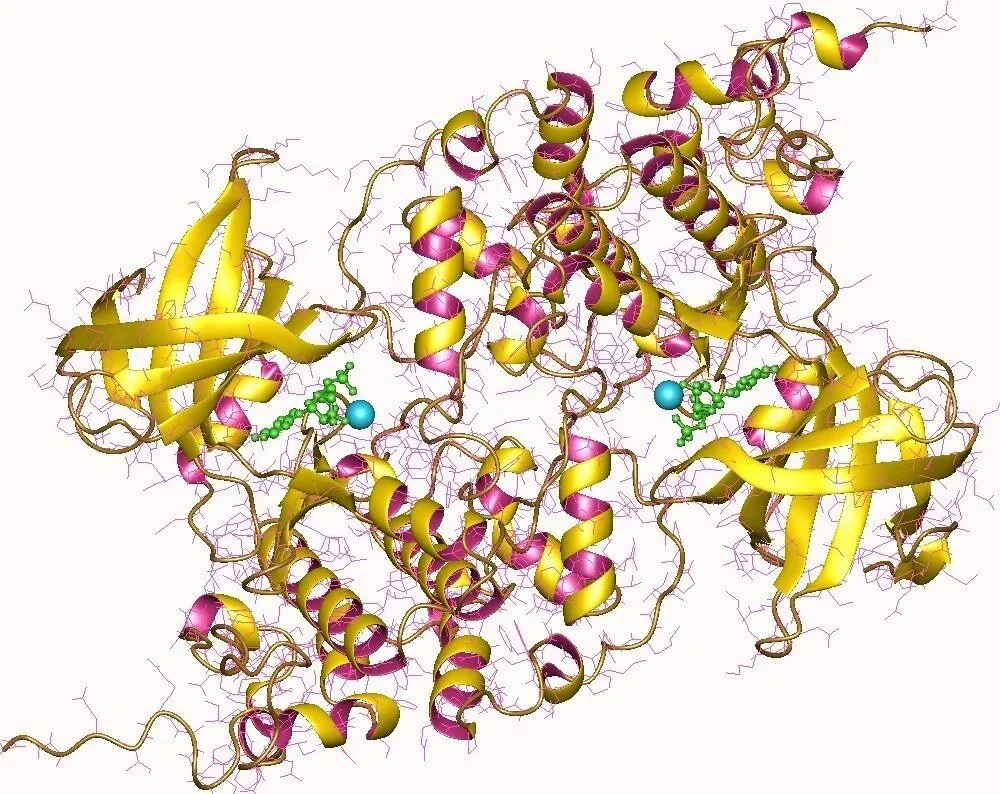
Tau proteins are a group of six protein isoforms from the gene MAPT (microtubule-associated protein). Isoforms are variants of a protein produced by a single gene, in this case MAPT through alternative splicing. Tau proteins are important in neurons and the central nervous system because they translate mRNA to proteins and maintain the stability of the axonal microtubules, which are critical in the structures of axons and transportation of neurotransmitters (Mandelkow & Mandelkow, 2012).
The tau hypothesis states that hyperphosphorylated tau proteins (HPTs) results in them clumping together as paired-helical-filament (PHF) tau and neurofibrillary tangles (NFTs), impeding normal mitosis, causing cancer, Alzheimer’s disease (AD), and other tauopathies (Kametani & Hasegawa, 2018). In AD patients especially, hyperphosphorylated tau proteins are associated in PHFs and NFTs, and some researchers hypothesize that HPTs are actually prions, and they are also infectious (Zhou & Liu, 2013). More research is needed to be done to see whether this is true.
However, the mechanism in which tau proteins are propagated has not been well documented, and there needs to be more research on the actual genetics of tau proteins, how they are transcribed and translated, and what causes tau proteins to become hyperphosphorylated.
Citations
Kametani, F., & Hasegawa, M. (2018). Reconsideration of Amyloid Hypothesis and Tau Hypothesis in Alzheimer's Disease. Frontiers in neuroscience, 12, 25. https://doi.org/10.3389/fnins.2018.00025
Mandelkow, E. M., & Mandelkow, E. (2012). Biochemistry and cell biology of tau protein in neurofibrillary degeneration. Cold Spring Harbor perspectives in medicine, 2(7), a006247. https://doi.org/10.1101/cshperspect.a006247
Zhou, J., & Liu, B. (2013). Alzheimer's disease and prion protein. Intractable & rare diseases research, 2(2), 35–44. https://doi.org/10.5582/irdr.2013.v2.2.35
