
Heart Disease & Stroke
Coronary Artery Disease (CAD) is the most common type of heart disease, which leads to strokes. Other heart diseases include heart arrythmias, heart valve disease, pericardial disease, cardiomyopathy, and congenital (meaning genetic) heart disease.
Heart arrhythmias are characterized as irregular heart beats, from tachycardia (too fast heart beats, more than 100 bpm) and bradycardia (too slow heart beats, less than 60 bpm). Pericardial disease can be an acute inflammation or chronic disease in the pericardium that holds the heart in place. Cardiomyopathy is described as a disease in the heart muscle, caused by high blood pressure and overwork.
Coronary artery disease, as the name implies, targets the coronary arteries that supply blood to the heart, impeding blood flow and causing heart attacks and strokes. Smoking, obesity, and increased amounts of low-density lipoproteins (LDL), which contribute to the LDL cholesterol in our bodies, contribute to a higher risk of CAD.
The most common symptom of CAD is the development of atherosclerotic plaque. This plaque consists of fatty macrophages that constrict arteries, collecting excess LDL cholesterol in the blood and causing angina (or pain in the chest) symptoms because of the lack of oxygen (ischemia).
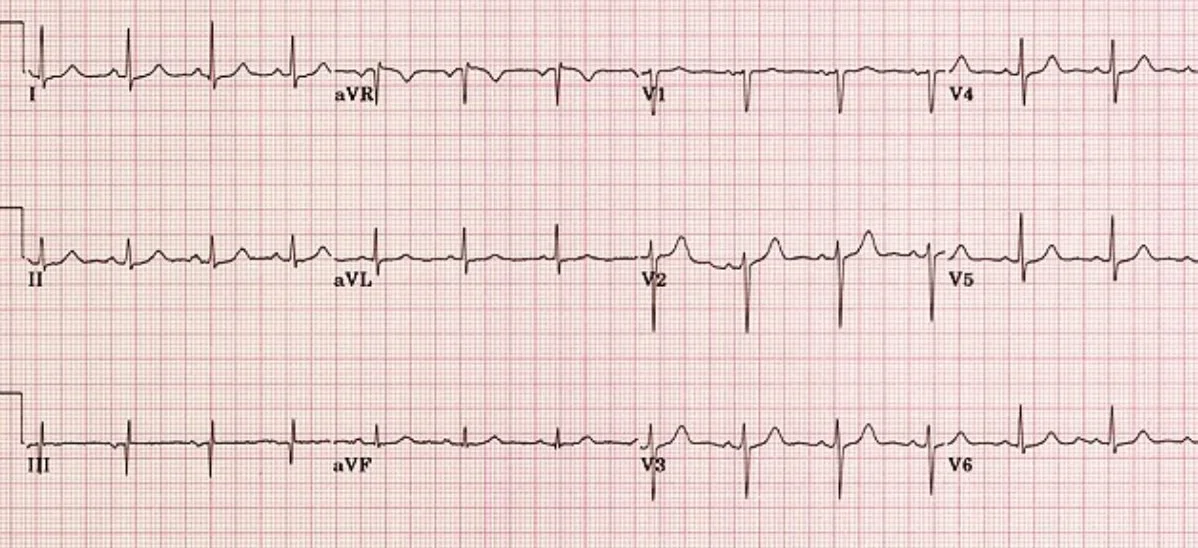
CAD can be found via an ECG or an echocardiography, which is an ultrasound of the heart. An echo can tell about how the valves are working, if there is a leak between sphincters (e.g. mitral valve regurgitation) or pulmonary embolism, which happens when a blood clot gets lodged in a part of a lung.
In many cases, CAD results in a myocardial infarction, commonly known as a heart attack. Due to lack of oxygen supply and the buildup of cholesterol (atherosclerosis), the heart may stop working due to an insignificant amount of blood flow. Without proper treatment, the first thing that happens is usually an ischemic stroke, when the brain may also lose enough blood to function. In other cases, there may be a hemorrhagic stroke that happens when a blood vessel pops. Without immediate attention, the result of a heart attack can leave a person dead or disabled for life.
Current Preventative Systems
How many people in the United States have heart disease?
According to the Center for Disease Control and Prevention, about 6.2 million adults in the United States have suffered from heart failure before (2020). Causing 379,800 deaths in 2018, coronary heart disease is one of the leading diseases in the United States, costing up to $90 to 150 billion dollars for patients, up to $214 billion in healthcare, and $138 billion in lost productivity from premature death (Urbich et al., 2020).
How well are the current systems put in place tackling the increase in the number of people with heart disease?
Million Hearts® 2022 is a “national initiative to prevent 1 million heart attacks and strokes within 5 years.” Examples of its practices have been funding at-home blood pressure programs, cholesterol management, and tobacco cessation.
The American Heart Association funds research toward medicines against heart disease, CPR and BLS certification, and initiatives to improve communities. The AHA Precision Medicine Platform is a data analytics platform used to use artificial intelligence in medical practices.
Many factors that lead to heart disease contribute to actual behaviors and lifestyles, which is why poverty is a big deciding factor for heart disease in the United States. Current research is on how to treat it, not prevent it. Policy changes and urban planning are essential for preventing heart disease and encouraging healthier food and exercise choices.
Further research can be done on how people can use technology to read their heart rate and blood pressure and how to treat it immediately if it is high. Many times, treatment can be delayed, so once it is administered, the heart has already experienced some type of trauma.
Chemicals Related
What is cholesterol?
Cholesterol is a lipophilic molecule in the blood, meaning it is attracted to lipids. It is crucial in the cell membrane by controlling chemical flow, synthesis of vitamin D, regulating hormones, and absorption of fat soluble vitamins A, D, E, and K (Di Ciaula et al., 2017). Serum cholesterol is carried by low-density cholesterol molecules, which is the dominant form of atherogenic cholesterol. Hypercholesterolemia is characterized by an LDL count of 160-189 mg/dL, while the optimal cholesterol for healthy people is characterized by an LDL count of 100 mg/dL. Optimal cholesterol for people fighting cardiovascular disease is below 70 mg/dL.
Apolipoprotein B is also an important protein in humans that can characterize hypercholesterolemia. This protein binds to LDL particles, creating lipoproteins, which can help animals signal immune cells during infection. Too much of apolipoprotein Bs usually signal too much LDL cholesterol and an increased risk of hypercholesterolemia and coronary heart disease.
What is blood pressure?
When measuring blood pressure, we measure two types: systolic and diastolic pressure. Usually the top or first number is the systolic pressure and the second is diastolic, such as 120/80. The systolic pressure measures the force of blood pushing against the walls during a beat, and the diastolic pressure measures the blood’s force when it is relaxed for about .7 seconds.
Normal systolic blood pressure is measured during rest is characterized as less than 120, and normal diastolic blood pressure is less than 80. Higher pressure can be a symptom of heart risk.
Medicine and Practices Related
What role does the liver play in cholesterol regulation?
The liver is essential in processing dietary cholesterol as well as creating cholesterol necessary for survival. It secretes bile acid to remove toxic chemicals (including alcohol) from our body. It is essential in cholesterol management; as a result, many medicines, such as statins, bile sequestration, and others target the liver to help manage cardiovascular disease.
What are statins?
Statins, or HMG-CoA reductase inhibitors, are chemicals that inhibit the production of cholesterol in the liver. The amount of cholesterol, surprisingly, is not actually the amount of cholesterol that is found in our diet, but by the amount of cholesterol produced by our liver. Statin therapy is divided into three different types: high, moderate, and low intensity, considering the LDL-C count.
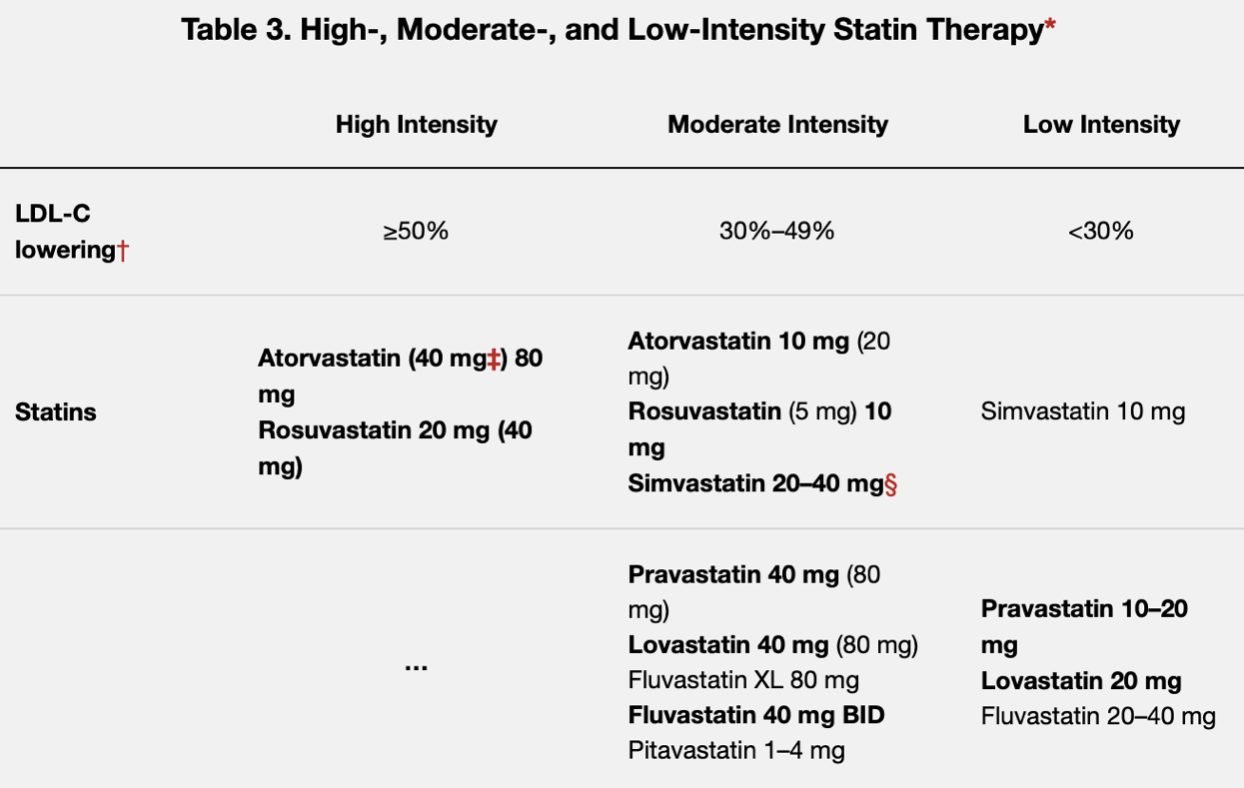
From the American Heart Association Journals (2020)
What are statins?
Atorvastatin (Lipitor) is a completely synthetic compound that inhibits HMG-CoA reductase, which reduces 3-hydroxy-3-methylglutaryl-coenzyme A (HMG-CoA) to mevalonate in the mevalonate pathway of creating cholesterol and hormones. Since the reduction process of HMG-CoA is the slowest part of the pathway (rate-limiting step), it is the optimal time to use a statin and reduce the production of cholesterol. It is normally taken during the night time, when cholesterol is being produced.
Warnings: Statins may increase the risk of liver problems, type 2 diabetes, abnormal muscle contractions (myopathy), and rhabdomyolysis (muscle breakdown). They are usually used in people with low probability of diabetes, people already on programs to help reduce LDL in their diets, and with people suffering from heart attacks needing immediate treatment.
Why are statins so expensive?
Rosuvastatin (Crestor) and simvastatin (Zocor) are alternatives for people with type 2 diabetes to lowering LDL levels (Berne & Siewert-Delle, 2005). Since simvastatin is a generic medication, it is often used because it is cheaper. Similarly, pravastatin and lovastatin are statins that are often used, though in lower doses for lower efficiency, because they are cheaper for preventative measures (Brandle et al., 2003).
What is nitroglycerin, and isn’t it dangerous?
Nitroglycerin, though a very flammable chemical used in bombs, is also used as a medicine and is essential in the body because it helps relax and regulate muscles. Patients experiencing heart attacks are often reminded to take their dose of nitroglycerin to relax a heart muscle to pump again (U.S. National Library Of Medicine, Inc., 2017).
Should we use advil? What is aspirin?
Aspirin is a nonsteroidal anti-inflammatory drug (NSAID) and blood thinner by making it harder for platelets in the blood to clot, allowing increased blood flow to the heart. NEVER take ibuprofen (advil or motrin) to decrease pain, which can cause blood constriction (U.S. National Library Of Medicine, Inc., 2021).
What is ezetimibe?
Ezetimibe (Zetia), also found in combination products with statins (Liptruzet, Nexlizet, Vytorin), is used to reduce LDL-C in the blood by reducing the absorption of cholesterol from the small intestine, causing the liver to absorb more cholesterol and lower circulating LDL-C (U.S. National Library Of Medicine, Inc., 2020).
What are bile acid sequestrants?
A bile acid sequestrant combines with chemicals inside bile in the liver to prevent their reabsorption into the body, which means that cholesterol is not reabsorbed into the blood. However, these are not as efficient as statins, and they can cause gastrointestinal issues and discomfort. (U.S. National Library Of Medicine, Inc., 2020).
What are PCSK9 inhibitors?
PCSK9 inhibitors are used with people with the genetic disease, familial hypercholesterolemia, where a study showed that PCSK9 knockout mice expressed low LDL-C levels (Pokhrel et al., 2021).
What does warfarin do?
Warfarin is a chemical that inhibits the vitamin K epoxide reductase complex 1 enzyme, which can deplete vitamin K reserves and reduce clotting, which can be used during an ischemic heart attack and stroke. It can also be used daily to prevent blood clots (Patel et al., 2021). Many times, elderly are given warfarin, but are told to be careful because it is a blood thinner.
Citations
Bhatia S, Yun L, Munir S, Gomez ME, Aly A. University of Texas. EKG Interpretation. Pediatric Cardiology: A Chapter in Core Concepts of Pediatrics, 2nd Edition. https://www.utmb.edu/pedi_ed/CoreV2/Cardiology/Cardiology4.html
Brandle M, Davidson MB, Schriger DL, Lorber B, Herman WH. 2003. Diabetes Care. American Diabetes Association. Cost Effectiveness of Statin Therapy for the Primary Prevention of Major Coronary Events in Individuals With Type 2 Diabetes. DOI: 10.2337/diacare.26.6.1796
Berne, C., Siewert-Delle, A., & URANUS study investigators (2005). Comparison of rosuvastatin and atorvastatin for lipid lowering in patients with type 2 diabetes mellitus: results from the URANUS study. Cardiovascular diabetology, 4, 7. https://doi.org/10.1186/1475-2840-4-7
Di Ciaula A, Garruti G, Lunardi Baccetto R, Molina-Molina E, Bonfrate L, Wang DQ, Portincasa P. Bile Acid Physiology. Ann Hepatol. 2017 Nov;16(Suppl. 1: s3-105.):s4-s14.
Huff T, Boyd B, Jialal I. Physiology, Cholesterol. [Updated 2021 Mar 2]. In: StatPearls [Internet]. Treasure Island (FL): StatPearls Publishing; 2021 Jan-. Available from: https://www.ncbi.nlm.nih.gov/books/NBK470561/
Patel S, Singh R, Preuss CV, et al. Warfarin. [Updated 2021 Feb 17]. In: StatPearls [Internet]. Treasure Island (FL): StatPearls Publishing; 2021 Jan-. Available from: https://www.ncbi.nlm.nih.gov/books/NBK470313/
Pokhrel B, Yuet WC, Levine SN. PCSK9 Inhibitors. [Updated 2021 Feb 13]. In: StatPearls [Internet]. Treasure Island (FL): StatPearls Publishing; 2021 Jan-. Available from: https://www.ncbi.nlm.nih.gov/books/NBK448100/
Urbich, M., Globe, G., Pantiri, K. et al. A Systematic Review of Medical Costs Associated with Heart Failure in the USA (2014–2020). PharmacoEconomics 38, 1219–1236 (2020). https://doi.org/10.1007/s40273-020-00952-0
U.S. National Library Of Medicine, MedlinePlus. Cardiac Conduction System. 2020.
https://medlineplus.gov/ency/anatomyvideos/000021.htm
U.S. National Library Of Medicine, MedlinePlus. Bile acid sequestrants for cholesterol. 2020. https://medlineplus.gov/ency/patientinstructions/000787.htm
U.S. National Library Of Medicine, MedlinePlus. Ezetimibe. 2020.
https://medlineplus.gov/druginfo/meds/a603015.html
U.S. National Library Of Medicine, MedlinePlus. Aspirin. 2020.
https://medlineplus.gov/druginfo/meds/a682878.html
U.S. National Library Of Medicine, MedlinePlus. Nitroglycerin Sublingual. 2017. https://medlineplus.gov/druginfo/meds/a601086.html
