
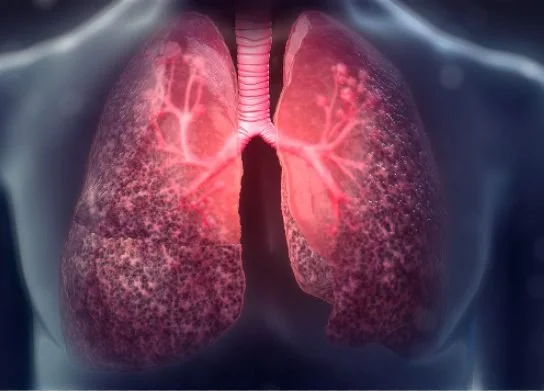
Cystic fibrosis (CF) is considered one of the most common respiratory diseases in the United States: this genetic disease results from a mutation that causes thick mucus to accumulate in the lungs and block the pathway to the pancreas, leading to infection and digestive problems as enzymes are unable to reach the intestines to break down food. The defective gene which causes CF is characterized by hundreds of mutations that inhibit the ability of the chloride transporters located on epithelial cells in the lung to properly transport chloride and sodium - a process necessary to ensure that levels of sodium chloride in bodily secretions do not rise above normal maintenance (Information (US), 2011).
In observing the cystic fibrosis genome, the defective cystic fibrosis transmembrane conductance regulator (CFTR) gene has a cytogenetic location of 7q31.2 and a genomic coordinate of 7:117,480,024-117,668,664 (OMIM Entry, 2020). The CFTR gene was first identified through a link with paraoxonase (PON), a lipoprotein enzyme, which confirmed cystic fibrosis as a genetic disease. Subsequently, the anonymous DNA marker CRI-917, which was later labeled D7S15, was found to be linked to CFTR. After a rumor spread that CFTR was located in chromosome 7, the linkage between CFTR and other DNA markers in chromosome 7 was confirmed (Tsui & Dorfman, 2013).
The CFTR gene codes for the cystic fibrosis transmembrane conductance regulator protein, which acts as a membrane channel across the cells that make mucus, sweat, saliva, tears, and digestive enzymes. The protein moves negatively charged chlorine ions in and out of the cell, ensuring the active movement of water within the tissues to produce thin mucus. This freely flowing mucus is important to lubricate the airways, organs, and tissues of the digestive, reproductive, and respiratory systems. The CFTR protein can also regulate the channels which move positively charged sodium ions across the cell membrane - a function necessary for the lungs and pancreas to properly function (Reference, n.d.).
Cystic fibrosis can be caused by the over 1200 autosomal recessive alleles of the CFTR gene, with the most common mutation, a consecutive three-base pair deletion in codons 507-508, as delta F508; however, only a few hundred alleles actually contribute to this disease. Here are a few examples of alleles that cause CF: the C1 allele, a substitution of base G to base T in codons 537-544, causes an insufficient amount of the CFTR protein to be produced, so it is unable to effectively transport chloride ions; the C2 allele, deletion of three consecutive T bases in codons 504-511, causes the CFTR protein to be altered when produced, so it never reaches the membrane to move chloride ions; and the C3 allele, a substitution of base G to base A in codons 549–556, blocks the opening of the protein where chloride ions go through (Allele Profile Cystic Fibrosis, n.d.). Complex CFTR alleles, including H949L, a missense mutation of base-pair 2978 in exon 15 from A to T, and H939R, a missense mutation of base-pair 2948 also located in exon 15 from A to G, have also been found to exhibit CF phenotypes - however, more research is needed to study their effects (Polizzi et al., 2011).
The C1, C2, and C3 alleles all result in thick mucus blocking the airway of the lungs and the digestive system not functioning properly. These changes in protein function affect an epithelial cell by trapping chloride ions in it, and with sodium absorption still persistent, water is not attracted to the space surrounding the cell; the cell now cannot function properly because of reduced anion transport but not sodium hyperabsorption (Rao, 2014). This absence of water outside the cell thickens mucus in the airways, causing the cilia to flatten so bacteria remains and breathing is difficult(Basics of the CFTR Protein, 2019). This trapping of microorganisms causes infections which lead to inflammation of lung tissue; white blood cells further damage the tissue as they try to destroy these microorganisms(The Basics of CF, 2019). Finally, the thick mucus affects the organism by not only hindering its ability to breathe, but also damaging the ability of the pancreas to produce insulin and digestive enzymes - leading to digestive problems that can cause diarrhea and malnutrition. Reproductive organs can also be blocked, leading to infertility or pregnancy complications(Genetics Home Reference, 2011).
As we continue to study Cystic Fibrosis and examine its genomic characteristics, we can understand how to effectively treat its symptoms and work towards curing affected patients.
Works Cited:
Information (US), N. C. for B. (2011). Cystic fibrosis. In www.ncbi.nlm.nih.gov. National Center for Biotechnology Information (US). https://www.ncbi.nlm.nih.gov/books/NBK22202/
Tsui, L.-C., & Dorfman, R. (2013). The Cystic Fibrosis Gene: A Molecular Genetic Perspective. Cold Spring Harbor Perspectives in Medicine, 3(2), a009472–a009472. https://doi.org/10.1101/cshperspect.a009472
OMIM Entry - * 602421 - CYSTIC FIBROSIS TRANSMEMBRANE CONDUCTANCE REGULATOR; CFTR. (n.d.). Omim.Org. Retrieved July 8, 2020, from https://omim.org/entry/602421?search=CFTR%20(36%20Mutationen%20+%20Sequenzierung)&highlight=CFTR%20(36%20Mutationen%20+%20Sequenzierung)
Cystic fibrosis - Mutation – WJEC - GCSE Biology (Single Science) Revision - WJEC. (n.d.). BBC Bitesize. https://www.bbc.co.uk/bitesize/guides/zsw4k7h/revision/2
Polizzi, A., Tesse, R., Santostasi, T., Diana, A., Manca, A., Logrillo, V. P., Cazzato, M. D., Pantaleo, M. G., & Armenio, L. (2011). Genotype-phenotype correlation in cystic fibrosis patients bearing [H939R;H949L] allele. Genetics and Molecular Biology, 34(3), 416–420. https://doi.org/10.1590/S1415-47572011000300008
Allele Profile Cystic fibrosis, Allele Basic Information Genetic Disorder -Cystic fibrosis. (n.d.). Retrieved July 10, 2020, from https://teach.genetics.utah.edu/content/genetics/files/alleles_CF.pdf
Reference, G. H. (n.d.). CFTR gene. Genetics Home Reference. Retrieved July 10, 2020, from https://ghr.nlm.nih.gov/gene/CFTR#:~:text=The%20CFTR%20gene%20provides%20instructions
Basics of the CFTR Protein. (2019). Cff.Org; Cystic Fibrosis Foundation. https://www.cff.org/Research/Research-Into-the-Disease/Restore-CFTR-Function/Basics-of-the-CFTR-Protein/
Rao, P. (2014). Carroll Collected Senior Honors Projects Theses, Essays, and Senior Honors Projects Cystic Fibrosis Impact on Cellular Function. https://collected.jcu.edu/cgi/viewcontent.cgi?article=1050&context=honorspapers
The Basics of CF. (2019). The Cystic Fibrosis Center at Stanford. https://med.stanford.edu/cfcenter/education/english/BasicsOfCF.html
Genetics Home Reference. (2011). Cystic fibrosis. Genetics Home Reference. https://ghr.nlm.nih.gov/condition/cystic-fibrosis#inheritance
Image Credit:
http://www.scientificanimations.com/mini-guts-treating-cystic-fibrosis/
Teens In Health Student Submission Winner
