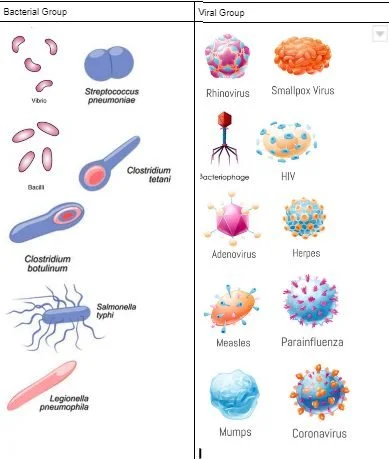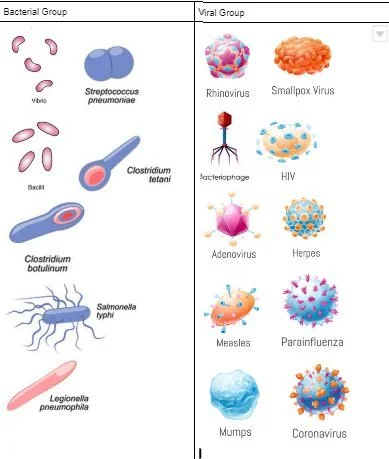
The similarities are that viral diseases and most bacterial infections are contagious. They are both diagnosed in a similar way, through present symptoms and laboratory tests. Many of these infections have similar symptoms such as cold and stomach aches, depending on the type of infection; for example, a stomach ache could either be a bacterial infection or a viral one. The differences between bacteria and viruses have an outer shell with protein spikes, used to attach themselves to cells in order to make a copy and spread throughout the body. Also, bacterial infections can be treated with antibiotics, while viral infections can be treated with antiviral medications and vaccines. Viruses are the ones that create and spread epidemics and pandemics. For example, there is the 1918 Influenza pandemic and even the current COVID-19 pandemic caused by a coronavirus.
Sources:
https://www.healthline.com/health/bacterial-vs-viral-infections#transmission