
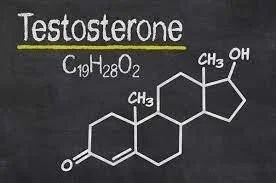
Due to the fact that men are less susceptible to many autoimmune diseases including Multiple Sclerosis, clinical trials by Dr. Rhonda Voskuhl, director of UCLA's Multiple Sclerosis Program, and her colleagues, were completed in order to test the hypothesis that testosterone might be protective in Multiple Sclerosis. Although it is known that testosterone “ameliorates experimental allergic encephalomyelitis (EAE)” is an animal model of Multiple Sclerosis, the effects of testosterone supplementation and functions on men with Multiple Sclerosis is unknown. Testosterone is a steroid hormone in which it stimulates development of the male secondary sexual characteristics produced in the testes. It regulates fertility, muscle mass fat, red blood cell production, and etc. This specific clinical trial sponsored by the University of California, Los Angeles, used 10 male participants to test out the testosterone treatment for Multiple Sclerosis. The official title of this lab is, “Testosterone Treatment for Multiple Sclerosis: A Preliminary Trial” and was started in April 2002 and completed in March of 2007. In this clinical lab, ten men with relapsing remitting Multiple Sclerosis were observed and studied using a crossover design in which each they were their own control. The ten participants were given a six-month pretreatment period and then was followed by a twelve month period of treatment with 100mg of testosterone daily.
The main outcome that was being measured in this clinical trial is of disability and cognition (the Multiple Sclerosis Functional Composite and the 7/24 Spatial Recall Test) as well as the monthly magnetic resonance imaging, computer-generated radio waves that produce accurate pictures of the organs and tissues of the body. After a year of treatment with 10g of the gel containing 100 mg of testosterone, it was shown to be correlated with the improvement in cognitive performance (p=.008) as well as a slowing brain atrophy (p<.001). The lean body mass, also known as muscle mass, increased (p=.02) as well. In conclusion, the outcome and many other investigational findings from the treatment clinical trial have proved that testosterone treatment is safe. It was also known to be well endured and contains likely neuroprotective effects in men with relapsing-remitting MS.
The advantage(s) of this research paper has proven that testosterone treatment among men with relapsing-remitting MS is well tolerated and has a protective effect of testosterone treatment on brain atrophy. As it was demonstrated to improve cognitive performance and slow down the deterioration of the brain with no adverse effects. Larger trials are underway in hopes of understanding the effect of testosterone regarding MS. A disadvantage of this research paper was its limitation of participants: cis-men around UCLA with no other serious diseases. Potential participants were excluded if they were to present another major disease or health issue. The limited area of observation, 100 miles within UCLA, could have altered the data as well. If the test could have had a sub-phase or section in which women with the same condition and treatment, it would have provided comparable results based on the gender. Another disadvantage of the research paper includes the reason for the direct cause of Multiple Sclerosis not being found. Currently, diagnosis for MS is often difficult. Misdiagnoses are prevalent as MS has no specific tests or cultures to give the clinician a direct conclusion. A diagnosis often relies on imaging, bloodwork, and clinical history that often vary from patient to patient. From misdiagnosis comes mistreatments which can lead to fatal outcomes. . It's important to take these provided disadvantages into consideration and make it a goal for creating further research to improve the results and the scope of the paper itself. Making sure to further perfect the clinical trials allows for more data which then leads to a deeper understanding of Multiple Sclerosis.
Work Cited
Sicotte, N. L. (2007, May). Testosterone treatment in multiple sclerosis: a pilot study. PubMed. Retrieved October 13, 2021, from https://pubmed.ncbi.nlm.nih.gov/17502467/
Testosterone Treatment for Multiple Sclerosis - Full Text View - ClinicalTrials.gov. (2006, November 30). US National Library of Medicine. Retrieved October 13, 2021, from https://clinicaltrials.gov/ct2/show/NCT00405353
UCLA. (2007, May 17). UCLA Study Shows Testosterone May Help Men With Multiple Sclerosis. UCLA Health. Retrieved October 13, 2021, from https://www.uclahealth.org/news/ucla-study-shows-testosterone-may-help-men-with-multiple-sclerosis
