

In 2019, a team led by Siobhan West researched long-term effects of surgeries on epilepsy patients. With that in mind, most trials were focused on people of all ages with focal epilepsy. Other foci of the trials were people who had epilepsy surgery prior and had an MRI, which happened in 90% of the cases. The evidence from 182 studies from 2013-2019 that included 16,855 people of all ages were examined. Only 9 studies were included in randomized controlled design while the rest 173 were part of a non-randomized design with no control group. The dependent variable is the outcome of surgery while the independent variables include vascular malformations, head injury, febrile seizures, intracranial monitoring, MRI results, tumors, and additional surgical factors like resection.
Of the 184 studies that were selected for the analysis, 182 studies with 16,756 participants underwent surgical procedure while 2 studies had 99 participants that received medical treatment.
The primary seizure outcome, which is the proportion of subjects achieving a good outcome were classified into 4 classes based on Engel’s categories and subcategories. The multivariate analysis on a number of factors affecting the postoperative outcome were assessed and compared. Of the 9 randomized control trials (RCD), 2 randomized surgery and medical treatment, 6 randomized on surgical type and 1 randomized the length of surgical resection. The results can be seen in the table below:
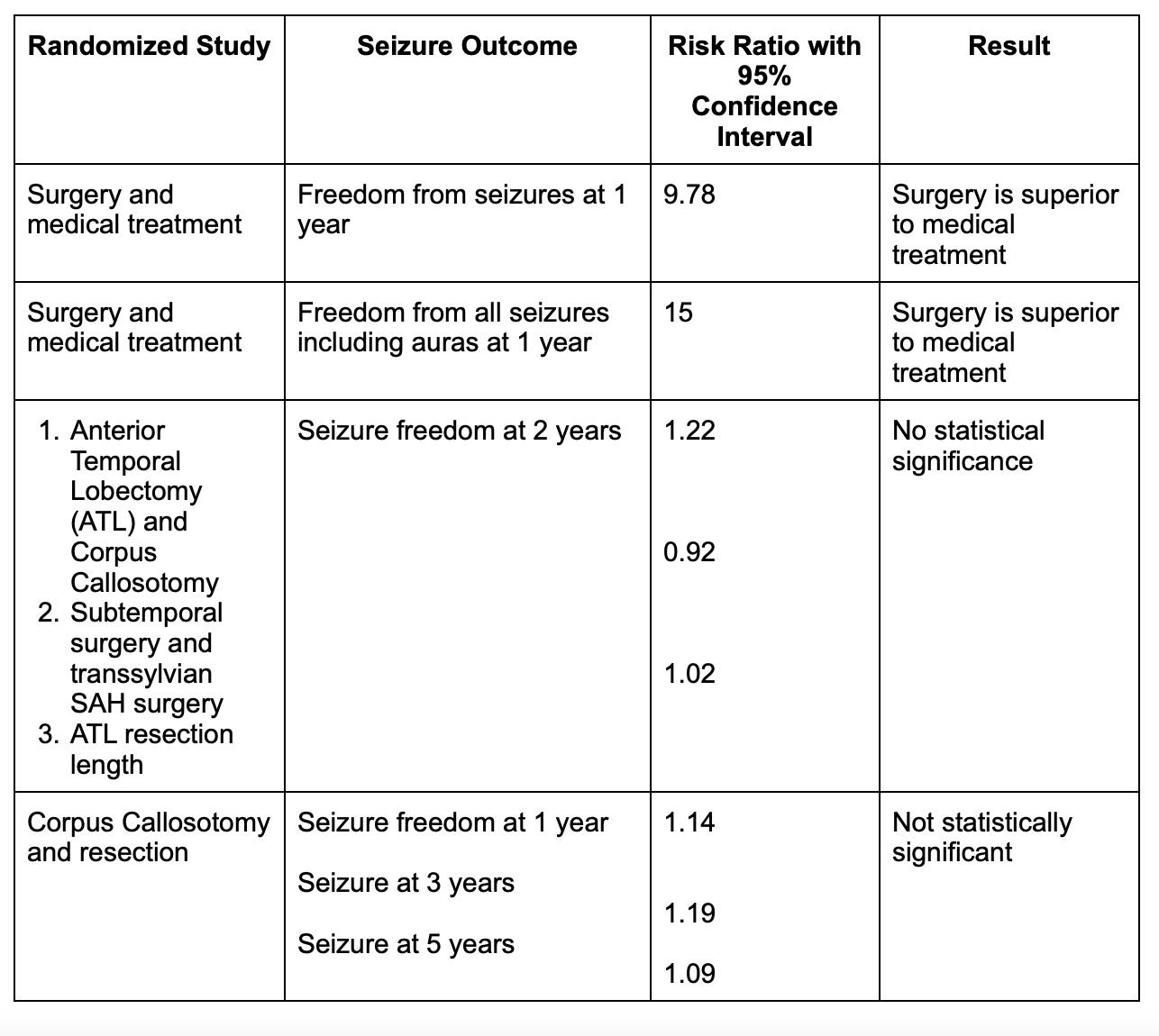
While the original data collection started with over 1450 studies, there were only 883 studies selected due to available data for randomized studies. This then became the sample size for the scope of this research study. This research study further confirmed the efficacy of temporal and extratemporal resection for patients that had focal epilepsy. It provides clinical guidance for surgical interventions especially in the areas of resection with extratemporal surgery.
The study could have been further improved to surgical method recommendations if there were consistent practice of post-operative data of seizure freedom at 1 year or additional set points in time. Many studies did not include data that resulted in excluding these studies from this research study. For example, 8 articles did not report a seizure outcome in their trials. Twenty-six different studies were used in the article, making most results difficult to summarize. In addition, many of the studies had a moderate to high risk of being biased. Keeping that in mind, further research could be improved if there were standards established in data capture and established publication rigor.
References
West S., Nevitt S J., Cotton J., Gandhi S., Weston J., Sudan A., Ramirez R., Newton R. (2019). Surgery of Epilepsy. Cochrane Database of Systematic Reviews. https://doi.org/10.1002/14651858.CD010541.pub3
