
The public views infectious diseases as eradicated and that they can get better with over the counter cough syrups. When it is far from that, the public thought that the war against pestilence infectious diseases was a victory due to vaccines and antibiotics. They wanted to shift the focus and resources towards chronic illnesses such as heart disease and cancer. Little did they know that these pathogens or disease-causing microorganisms would be smarter and more adaptive to the novel innovations. The infectious diseases would evolve into new strains that the vaccines could not detect and prepare the body for the impact. The virus becomes resistant to antibiotics and continues to strive as the anti-biotics become useless. As time went by, the common cold or the flu has become a natural occurrence, while they are the in the top ten leading causes of death in America. Infectious diseases cause diarrheal diseases, which is the 7th leading cause of death, HIV/AIDS at 6th, and lower respiratory infections in 4th place. The infectious diseases that could have caused these diseases are one of four microorganisms types: bacterium, viruses, parasites, and fungi. It is only dangerous to humans when the microorganism becomes pathogenic. One infectious disease that has taken 30,000 lives each year is yellow fever (Center for Disease Control and Prevention, 2019). Throughout these setbacks, humanity continues to also strive forward for a better future. The ongoing battle with yellow fever portrays the changes and advances in treating and eradicating diseases from the 1800s to the present day.
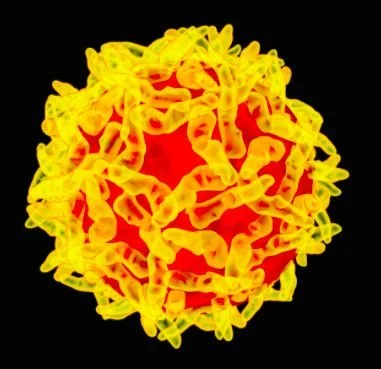
The etiology of the yellow fever virus started with an arthropod-borne virus of the Flavivirus genus. The morphology of yellow fever has a spherical shape, but it also referred to as being pleomorphic, which means that its appearance can vary (Standford, n.d). Gram stains are not functional to study its morphology. It would be difficult to observe the shape and form of the virus, because of its small size, standing at about 40-65 nanometers. The Stanford study states that the microbe that causes yellow fever is the flavivirus. They are single-stranded ribonucleic acid (RNA) viruses. The virus replicates its genetic information in the cytoplasm of the infected cell, and the enzymes in the host cell assist in making more virus particles. Those constructed particles become new viruses. The yellow fever virus is motile, so after the formulation of the virus, it moves to another location and restarts the process. That information is retained in the infected cells or the human body even after someone recovers from the infection, so the continuous growth of viral content causes infections. That is the main reason why it is difficult to kill and easily eradicate the yellow fever virus. Health care providers cannot only kill them because they continue to reproduce and cause diseases.
The symptoms of the yellow fever virus vary in severity. According to the Center for Disease Control and Prevention (CDC) (2019), the majority of people who get infected are either asymptomatic: show no symptoms or have mild symptoms with an incubation period of three to six days. Mild symptoms include chills, a sudden onset of fever, vomiting, and fatigue (Center for Disease Control and Prevention, 2019). That group of people completely recover within one week, without the need for hospitalization. On the other hand, 1 in 7 that show mild symptoms will go through a "brief remission (a time you feel better)" then show more severe symptoms after a few hours or a day (Center for Disease Control and Prevention, 2019). Yellow fever is a hemorrhagic infection, meaning in critical occasions, it will cause high fevers, internal bleeding, organ failure, and jaundice (yellow skin, the derivative of the name). The CDC (2019) states that among those that develop severe symptoms, 30-60% die, so finding a reliable treatment is essential.
The first recorded yellow fever virus epidemic was in the Yucatan Peninsula in 1648, where hundreds of citizens died each day (Staples JE, Monath TP, 2008). The identification of the virus was difficult due to the lack of resources of test kits, so the diagnosis was based on severe symptoms and location. Treatments were simple, supportive care and temporary pain relief until the body's immune system fights off the virus. In the late 1800s, bacteriologist tried to identify the cause of yellow fever. They successfully found that bacillus icteroid was the pathogenic source after going through Koch's Postulates (Proust et al., 1900). At the time, professionals thought that the infection was spreading through direct contact between hosts. Doctors suggested prevention methods were isolation, disinfection, and maintaining good hygiene practices, as stated in Proust and Wurtz's (1900) public health report. It was not until the late 19th century that Surgeon General suggested a study in Cuba after its war with Spain (Staples et al., (2008). That study proved that the Aedes Gypti mosquitoes were responsible for spreading the infection (Staples et al., 2008). Those mosquitoes were the vectors to humans, so it was contagious, and quarantine was not needed. The number of outbreaks had a linear correlation with rainfall and temperature, as seen in figure 1 (Hamlet et al. 2018). Knowing the root of the cause made it easier to focus on the area that the Aedes mosquito species thrive, which are Sub-Saharan Africa and South America. By the 1900s, a Surgeon general instituted a "campaign in Havana against the urban mosquito vector, eliminating the disease in 1902" (Staples et al., 2008). By the early 1900s, the public was informed of the cause of the yellow fever virus through advancements in cell culturing and epidemiology, but they still lacked an effective treatment.
In 2003, a mysterious outbreak was reported to the CDC by the Norwegian Church Aid in Southern Sudan when seven adults over the age of 30 died. The health care professionals in Southern Sudan could not accurately identify or diagnose the viral hemorrhagic disease. By 1960, genetic specialists and virologists developed a hemagglutination-inhibition and complement fixation test to efficiently detect the antibodies of the yellow fever virus (Staples et al., (2008). Thus, when the CDC sends a team of scientific experts, including bacteriologists and medical technologists, they can do serologic testing on infected patients. They took 28 serum samples, smeared it, stored it in a liquid nitrogen dry shipper, and sent it to the laboratory at the Kenya Medical Research Institute (KEMRI) in Nairobi (Onyango et al., 2004). The samples were subjected to RT-PCR and nucleotide sequencing to confirm the genome of the flavivirus (Onyango et al., 2004). Virus isolation and differential diagnosis were performed to rule out other viruses (Onyango et al., 2004). After identifying the yellow fever virus as the cause of the epidemic, a rapid response plan was constructed. Physicians and nurses were the frontlines of the outbreak. They diagnose and assist the civilians. They also gave supportive care for severe patients. They focused on the treatment of pain medication to alleviate the pain while the patient's immune system fights the virus. By 2003, preventative care was more advanced. It changed from recommendations to wear long sleeves and insect repellant to the development of vaccines in 1930. In the case of the South Sudan outbreak, 80% of those at risk were vaccinated with the help of local health care professionals. Till now, epidemiologists continue to monitor the situation. They keep track of the cases worldwide. They also look for a deviation from average rates of occurrence to consider the situation as an epidemic. If that happens, more epidemiologists will be sent to the site to find the source and devise a plan to contain it. All parts of the scientific community work together so that the virus can be eradicated in those developing countries.
At this moment, the yellow fever virus is controlled through vaccinations, but no cures exist yet. On a global scale, the United States of America and is a little to no risk because the Aedes Gypti mosquitoes are not the only areas at risk are South America and Africa. Vaccines are only recommended for those that y areas at risk are South America and Africa or those that are visiting the at-risk areas. A single dose of the vaccine will provide lifelong protection for most people (Center for Disease Control and Prevention, 2019). Other preventative measures are to prevent mosquito bites by using insect repellent, sleeping in an enclosed and well-airconditioned place. If those resources are difficult to attain, people are recommended to wear long-sleeve clothing and sleep under a bed net. Only the latter option is open to those in underdeveloped countries at risk.
In response to the annual outbreaks in Sudan, a yellow fever campaign was launched by the federal ministry of health to eradicate the virus in the country (World Health Organization, 2019b). The World Health Organization (WHO) (2019b) published that the project was in the final phase as of November 2019. Thirty million people at risk will be vaccinated by 2020. Nurses play a critical role in that process. The group of health care professionals that administer the most vaccines is skilled nurses. Nurses take risks of contracting the virus to help to contain it.
The current laboratory identification method is serologic tests (look for antibodies and identify the organism) and RT-PCT. The Eradicate Yellow fever Epidemic Strategy is working on accelerating the development of target product profiles (TPP) and expand laboratory capacity in countries in Africa (World Health Organization, 2019a). This strategy will reduce the time to confirm outbreaks, so rapid response reaction will be faster. Thus, mortality rates will decrease. Till today, the world is working together for a better tomorrow, where the yellow fever virus is eradicated worldwide.
Works Cited:
Center for Disease Control and Prevention. (2019). Yellow Fever. Retrieved February 12, 2020, from https://www.cdc.gov/yellowfever/index.html
Hamlet A, Jean K, Perea W, Yactayo S, Biey J, Van Kerkhove M, et al. (2018) The seasonal influence of climate and environment on yellow fever transmission across Africa.
Onyango, C. O., Ofula, V. O., Sang, R. C., Konongoi, S. L., Sow, A., De Cock, K. M....Coldren, R. L. (2004). Yellow Fever Outbreak, Imatong, Southern Sudan. Emerging Infectious Diseases, 10(6), 1064-1068.
Proust, & Wurtz. (1900). YELLOW FEVER. Public Health Reports (1896-1970), 15(36), 2197-2202.
Standford. (n.d.). Flavivirus. Retreived February 28, 2020, from https://web.stanford.edu/group/virus/1999/asb-flavi/overview.htm
Staples JE, Monath TP. (2008). Yellow Fever: 100 Years of Discovery. JAMA.
World Health Organization. (2019a). EYE Call to Research and Developers to Accelerate Towards Improved Yellow Fever Diagnostics. Retrieved February 12, 2020, from https://www.who.int/emergencies/diseases/yellow-fever/call-to-accelerate-towards-improved-diagnostics/en/
World Health Organization. (2019b). Yellow Fever Campaign Launches in Khartoum State as Final Phase of Countrywide Immunization Drive.
Figures
Image Credit:
https://www.wired.com/2016/04/yellow-fevers-comeback-utterly-avoidable-blew/
Teens In Health Student Submission Winner
