
Aging is a natural, inevitable part of life. Unfortunately, in addition to certain obvious phenotypic changes, such as wrinkling skin or greying hair, an increased prevalence of diseases like cancer are almost universally associated with it. What is less clear, however, are the biological processes that cause these changes. One theory many scientists support is that telomeres have something to do with the changes seen in the elderly population.
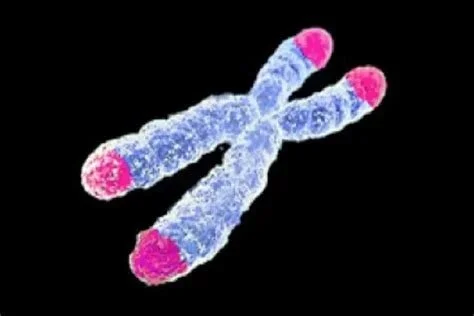
Telomeres are often compared to the “caps” at the end of the DNA molecules which make up linear chromosomes. Due to the imperfect nature of DNA replication in eukaryotic organisms with linear chromosomes (such as humans), a short sequence of nucleotides is not copied over during cell division. As a result, the genetic material contained within those nucleotides is lost. This could be potentially detrimental to the survival of these organisms - no species could survive long if their bodies lost the ability to synthesize important proteins!
Enter telomeres - simply put, they are short, repeated sequences of nucleotides at the end of chromosomes. Telomeres consist of the same six-nucleotide sequences (in vertebrates, the sequence is TTAGGG) repeated hundreds to thousands of times over. Since these repetitive sequences, which do not contain vital genetic information, are at the ends of chromosomes, they act as insulation for the more important inner DNA. This way, nucleotides are still lost during DNA replication, but those nucleotides are a part of the telomere, not important genes.
As cells keep dividing, the length of chromosomes (and their telomeres) gradually shrink in length. When telomeres become critically short and eventually disappear altogether, genetic DNA starts getting damaged and reduced. This can only occur so many times before the cell becomes inactive, reaching senescence, or undergoes apoptosis (a type of cell death). Average telomere length is almost directly responsible for the Hayflick Limit, which is the number of times a cell can divide before stopping due to irreparable damage. Its discoverer and namesake Leonard Hayflick found this number to be roughly fifty.
As with most things, there are some exceptions to this generalization. For example, germ (egg and sperm) cells and stem cells have to undergo division many more than fifty times in order to be effective. There is an enzyme called telomerase that is quite active in these types of cells, and its function is to extend telomere length so that DNA can replicate many times and still have telomeric DNA left over. Telomerase is present to some degree in other somatic (body) cells, but there is much less of it. The reason there can’t be more telomerase in more cells is because it would get in the way of the body’s natural cancer-detectors. Since there is an overexpression of telomerase in the majority of cancer cells, the body would have a more difficult time distinguishing between normal cells and cancerous ones.
The discovery of telomeres startled the scientific community. In the past, biologists knew that people aged and they knew that there was something in the human body that affected the development of certain cells over time. Once they found out that it was just these little “caps” on the tips of chromosomes, that differentiated the physical characteristics between a child and an elderly person, they entered a race to figure out how to slow - or even entirely eliminate - the shortening of these telomeres. In fact, they would be working in a market that did not even exist yet. They knew that people wanted to live a long life and they knew that if they could manipulate the erosion of telomeres, they could address a vast number of chronic diseases that were often variable to age.
Currently, there is a study that is attempting to use telomeres to address one of the world’s most feared, dangerous diseases: cancer. The correlation between telomeres and most human cancers is that since telomeres shorten with age, chromosomes start to experience lesions and other damaging incongruencies, which can ultimately lead to the production of cancer cells. Scientists are attempting to create telomere-based treatments for certain cancers where telomerase inhibitors are administered to the patient and theoretically, they would terminate certain forms of cancer. However, this is a relatively new approach to treating cancer and while scientists are taking large, bold strides into the unknown, there is still so much that they have yet to discover.
On the other hand, dietitians are taking a different, broader approach to address telomere shortening. Some researchers are attempting to observe the effects of different diets on the cross-sectional areas of telomeres. In one study, scientists tested the average size of telomeres in a group of people on a strict, low-fat Meditteranean diet and then they measured the size of telomeres in a group of people eating an uncontrolled baseline diet. After five years, these researchers found that the people on a Meditteranean diet generally had longer a lower rate of telomere erosion than the control group. However, this correlation was only consistent with the women in the group; the men, on the other hand, either did not experience any difference or they had a slightly increased rate of telomere erosion. Due to the ambiguity of such results, there have not been any certified diet-based treatments to address telomere shortening, but more research is underway.
Telomeres are still a relatively new concept in the scientific world, and although there is tremendous potential in manipulating these chromosome caps, there must be an immense amount of research, time, and money invested in learning more about them.
Works Cited:
https://www.sciencedirect.com/science/article/abs/pii/S0261561416300012
https://www.science.org.au/curious/people-medicine/what-are-telomeres
https://www.mechanobio.info/genome-regulation/what-are-telomeres/
Image Credit: https://assets.newatlas.com/dims4/default/ed58ae6/2147483647/strip/true/crop/496x331+47+0/resize/1160x774!/quality/90/?url=https:%2F%2Fassets.newatlas.com%2Farchive%2Fhelenblau-1.jpg
