
Abstract
Mental health in recent history has been heavily researched and focused on, and a large percentage of the people that are affected by it are adolescents. However, there is a lot of disparity in how the public views mental health issues. “What is considered depression, and how do I know if I am affected by it?” While there have been attempts to properly define a mental condition, it is difficult to take into account its numerous lifestyle factors. Computed tomography scans, or CT scans, could be used in order to help define mental health issues such as depression in order to give a more holistic and scientific procedure to how to deal with them.
Introduction
Literature Review
Mental health issues are becoming increasingly common in adolescents today. Many studies have been conducted throughout the last decade, and even before that, to try and determine what can actually cause conditions such as anxiety and depression, and what sort of chemicals function within the brain to set off these negative reactions in the mind, and also the chemicals that create positive reactions to help fight against these mental issues. In recent years, there have been some papers dedicated to studying events that may have set off a mass wave of depression in adolescents. An obvious culprit would be COVID-19, on which one paper (Jones et al., 2021), conducted research on and found that COVID actually significantly harmed the mental health of kids aged 13-17. Another study proved that nature, and being outside actually helped adolescents with a bad mental state quite a lot and provided that they had constant exposure to the natural aspects of the world; things like trees, grass, and leaves, they would always be a lot happier and more mentally stable than those that were constantly living indoors for the most part and not experiencing the outside (Tillmann et al., 2018). These papers, from even socioeconomic status, nature, and lifestyles, show that environmental factors contribute to one’s mental health.
Social factors also play an important part in one’s mental health, which relates to all their interactions throughout one’s day. Even just interacting and conversing with others has helped many children and teens fix their mental state (García-Carrión et al., 2001). This paper is especially credible because the data was taken from interactions during the 10 year span from 2007-2017, which encompasses both the social media era and prior, and so we get the full sense and picture of what could really be causing depression and anxiety in teenagers. The nature of electronic and virtual data is especially useful in this scenario as well, because it allows the researchers to take information from places and schools all around the country and around the world, rather than just from a specific close list of schools near the people that are researching. In further research like this, we are better able to gain a more holistic view of factors contributing to one’s mental health.
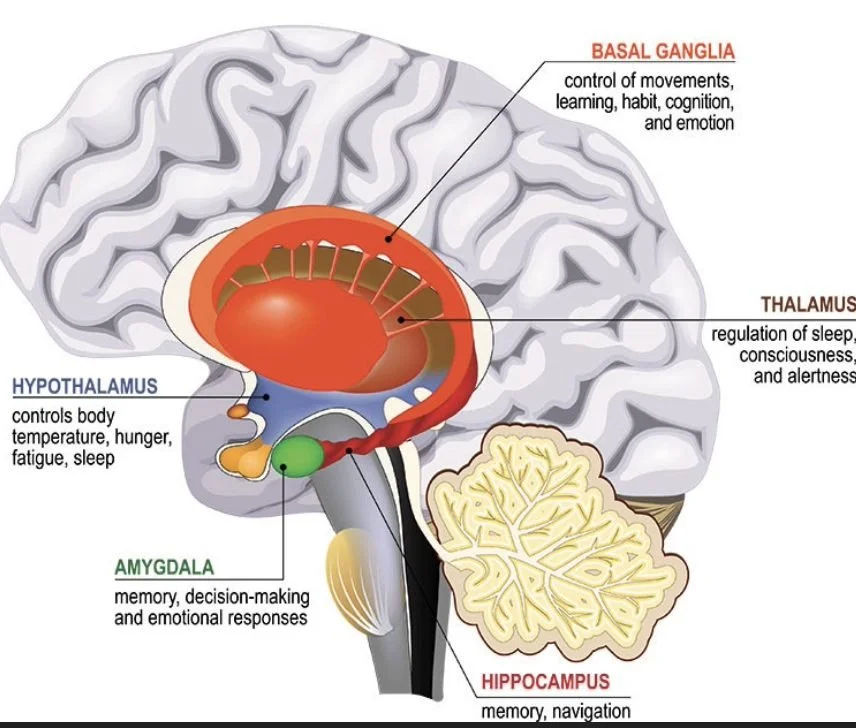
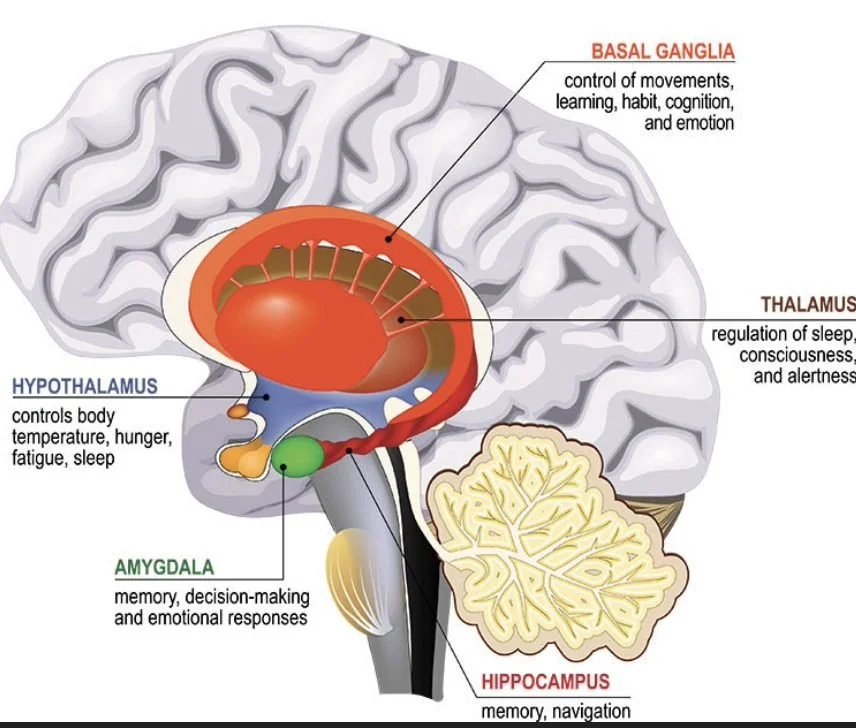
Neuroimagry, which can be defined as producing images of activity in the brain to have a better look at what is going on internally, has helped pave the way to better identify a person’s mental condition. It helps with classifying individual depression into subtypes, as well as mood disorders. There are a lot of different types of neuroimaging: PET’s, MRI’s, DTI’s, MEG’s, and EEG’s. Recently, neuroimaging has gone through an even more impactful breakthrough, where scientists are beginning to figure out how to use it to link a specific subsect of depression to a specific intervention or event that occured, and are also beginning to be able to find out how long the condition has existed in the patient and how serious it is. This is significant because it allows medical professionals and scientists to be able to treat their patients better and treat them more personally to their specific condition rather than just giving them the base treatment for all of their clients’ depression. For the purposes of this paper, we will more be going over mental health in adolescents specifically, rather than in adults, because mental health problems in teens and kids are also often overlooked when they can be just as bad or even worse than adult cases.
Rationale
Former research usually focused on the factors of mental health issues, such as depression. Recent research has been done on neuroimaging in order to help diagnose and treat mental health issues. In this paper, we will be focusing on depression; moreover, we will be focusing on adolescents. Since recent research has only been done on adults, it is crucial to also gain insight on how depression may affect maturing teens, especially since mental health is a crucial part of one’s adolescence and childhood. In this proposal, we will be examining teenagers’ mental and neurological health according to current research on adults.
Design & Methodology
Subjects
In this study, we will be studying adolescent teens (ages 13 to 18) from the San Francisco Bay Area in general, and how a CT scan might help you figure out if there is an abnormality in the brain that could mean something beyond just a tumor or some sort of cancer.
Procedures
This study will be similar to the study led by Rosemary Holt from the University of Cambridge, conducted on adolescents with Major Depressive Disorder (2016). Their study compared 56 MDD patients to 30 healthy participants in performing a memory task. We will be reperforming such a study, but it would be with San Francisco Bay Area high school students and analyzing them with their lifestyle, mental health, and nutrition through surveys. Like Holt’s team, we would use the Siemens Magnetom Tim Trio scanner operating at three Tesla (3 T), and we would use whole brain echo-planar imaging (EPI) data depicting blood oxygen level dependent (BOLD) contrast and a Magnetisation Prepared Rapid Acquisition Gradient Echo (MPRAGE) sequence on the patients while trying to remember certain facts or images.
Discussion
A common issue that medical professionals run into when diagnosing a certain patient with a mental disorder is that they never have full proof or closure on if the patient actually has the condition or not, the severity of the condition, or how the condition is going to affect them and if it is ever going to get better. There is also no method on concluding if the patient is telling the truth or not, and so having a procedure to analyze and interpret the brain and the mind itself to conclude on a mental health issue such as depression is extremely important to be able to do.
While trying to diagnose mental health issues currently, there is the chance with a patient not being honest with their answers, so it runs into the problem that while we may have accurate CT scans, our data would not be fully robust in correlation with mental health issues. Nevertheless, we may also take into account other quantifiable factors, such as lifestyle and nutrition, in order to continue to gain a more holistic view of depression and find ways to treat it.
Bibliography
ACR, R. S. N. A. and. (2019, January 23). Computed tomography (ct) - head. Radiologyinfo.org. https://www.radiologyinfo.org/en/info/headct.
Holt, R. J., Graham, J. M., Whitaker, K. J., Hagan, C. C., Ooi, C., Wilkinson, P. O., … Suckling, J. (2016). Functional MRI of emotional memory in adolescent depression. Developmental Cognitive Neuroscience, 19, 31–41. doi:10.1016/j.dcn.2015.12.013
García-Carrión, R., Villarejo-Carballido, B., & Villardón-Gallego, L. (1AD, January 1). Children and Adolescents Mental Health: A Systematic Review of Interaction-Based Interventions in Schools and Communities. Frontiers. https://www.frontiersin.org/articles/10.3389/fpsyg.2019.00918/full.
Jones, E. A. K., Mitra, A. K., & Bhuiyan, A. R. (2021, March 3). Impact of COVID-19 on Mental Health in Adolescents: A Systematic Review. International journal of environmental research and public health. https://www.ncbi.nlm.nih.gov/pmc/articles/PMC7967607/.
Tillmann, S., Tobin, D., Avison, W., & Gilliland, J. (2018, October 1). Mental health benefits of interactions with nature in children and teenagers: a systematic review. Journal of Epidemiology & Community Health. https://jech.bmj.com/content/72/10/958.abstract.
