
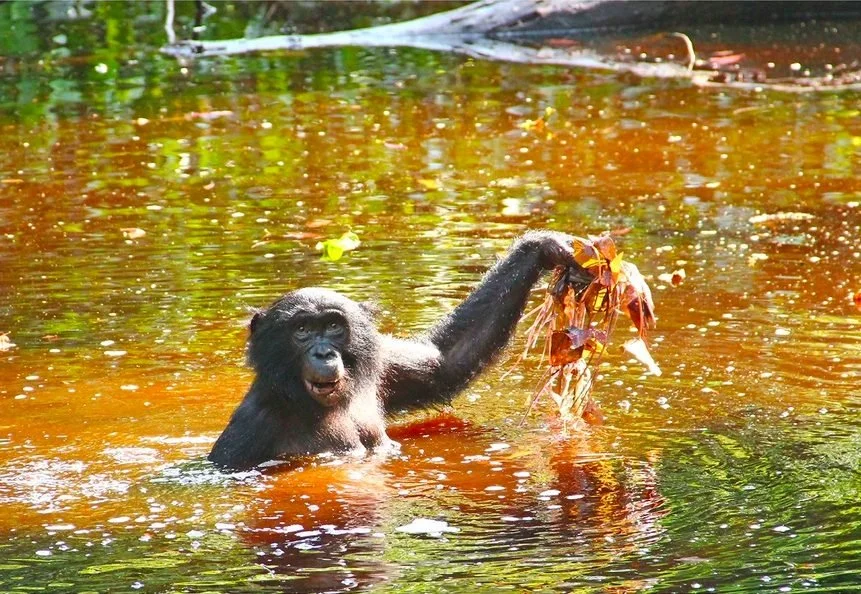
From discovering millions of stone tools to genetic decoding, scientists are continuing to figure out the mystery that is Human Evolution. Human Evolution is one of the oldest subjects in science other than maybe paleontology and cosmology. Not cosmetology, cosmology; the study of the universe. The study of human evolution ranges from Lucy, the primate whose three million year old skeleton found to be very useful in research to studying the embryology of the first humans on Earth. We continue to branch out into different sections of evolution such as brain development and the link it has to an intake of various nutrients, one critical resource being iodine.
Just as we were told to take vitamins as a kid, the intake of iodine nutrients that promote brain development and protect hominids from a loss of energy is linked to the emergence of traits such as advanced communicative and cognitive skills. Understanding how hominoid primates, such as bonobos of central Congo, meet their iodine intake may explain how prehistoric hominins acquire barely enough iodine. According to the World Health Organization, the continental part of the Congo Basin is considered to be a region where natural resources of iodine are scarce, so the question raised is about how ancestral populations were able to meet their body’s iodine requirements in such an environment.
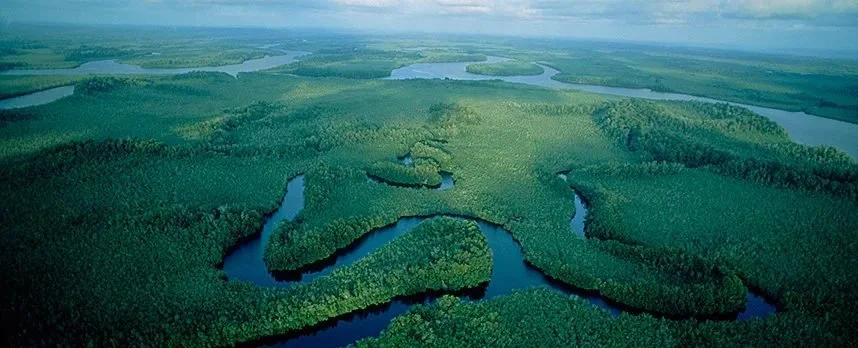
An overview of the Congo Basin and it’s water sources
There are a few ideas on how these populations obtained iodine, or if they continued to barely sustain on their horrifically low iodine levels. This situation would go two different ways. The first one is that they would rely on iodine brought in from other regions via water systems and similar system. The second one would be that these species suffered from a notoriously low iodine level and from then have adapted to those conditions. The LuiKotale Bonobo project found out that, surprisingly, there were plenty of sources of iodine supply such as in the water where some species of aquatic herbs contain high iodine concentrations as of those similar to marine algae.
Another key aspect to consider is the extent to which the iodine supplies in the lowlands are representative of the entire Congo. The results also display how the aquatic herbs were decent sources of other minerals too. A deficiency in dietary iodine levels is a threat to the hominoids that were once exposed to the environment. The hominoids’ lack of nutrition would be exemplified by many symptoms, including a reduced synthesis of thyroxine. The amount of iodine found in the aquatic herbs and its correlation with the urinary samples of the bonobos allows a different perspective on how the hominids of the time were able to receive the nutrients they needed.
The mainland part of the Congo bowl is considered as a locale where wellsprings of iodine are believed to be rare and these people rely upon supplementation of iodine. The territory is likewise occupied by hominoid primate species, and the absence of proof for iodine insufficiency manifestations in these species demonstrates that the regular diet gives adequate measures of iodine. The consequences of our examination demonstrate that the Congo bowl isn't without characteristic wellsprings of iodine in essence, that a few types of sea-going herbs contain iodine fixations that are practically comparable to those of marine green growth, and that bonobos expend such iodine-containing herbs. Transformative situations adjust significant improvements of human advancement to ecological states of beachfront zones offer a diet that activated encephalization quotients, measure of brain mass, in hominins. The consequences of our investigation recommend that this requirement for dietary iodine would not have prevented tribal hominins from attacking mainland timberland territories and that utilization of amphibian herbs could have added to fulfilling the iodine prerequisites of hominin masses that were prepared by weight control plans, predominant in beachfront conditions.
Hohmann, Gottfried, Thomas, and Barbara Fruth. "Fishing for iodine: What aquatic foraging by bonobos tells us about human evolution." BMC Zoology. 02 July 2019. BioMed Central. 17 Aug. 2019 <https://bmczool.biomedcentral.com/articles/10.1186/s40850-019-0043-z>.
