
Oxygen is an essential part of life. Our brains need a constant supply of it to function properly, and being cut off can lead to some truly dangerous outcomes. Hypoxia is a term for when the brain does not receive enough oxygen. The word hypoxia comes from “hypo” (not enough) and “ox” (oxygen). Hypoxia can lead to cognitive issues, motor issues, and even brain death.
Sometimes, unconventional solutions to our problems come from unexpected places. Getting oxygen into patients’ brains after undergoing hypoxia is one of them. Neuroscientists Suzan Özugur, Hans Straka, and others from Ludwig-Maximilians University in Munich have been thinking outside the box to come up with novel solutions to this pressing issue.
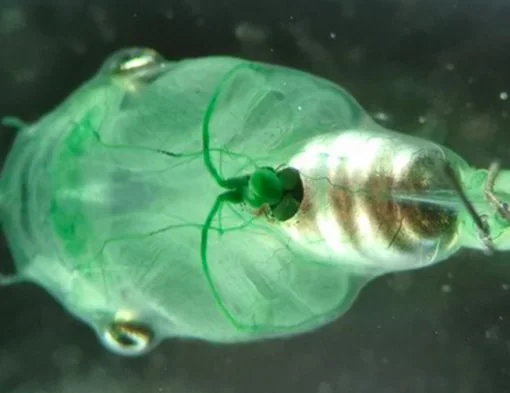
After severing the heads of tadpoles, these scientists observed the cessation of neural function. In an attempt to rejuvenate that function, they began by first attempting to bubble oxygen in the brains. While somewhat effective, Dr. Hans Straka came up with a better idea: using algae to supply the oxygen.
Though experimental, the injection of algae into tadpoles has shown promising effects. The only main prerequisites of an idealistic environment for algae to thrive and generate oxygen is the correct wavelength of light. When scientists injected the algae into the tadpoles, they needed to shine a light of the correct wavelength in order to stimulate the algae and initiate the light reaction of photosynthesis, starting the production of oxygen.
In order to gauge the success of algae-produced oxygen, scientists had to first thirst the tadpole heads of oxygen. They waited for the ocular nerves to cease depolarization so that any activity observed after this depletion is a result solely of the oxygen generated from the algae. After the ocular nerves shut down, they exposed the injected algae to the specific wavelength of light, stimulating photosynthesis and producing oxygen. Within a couple of minutes, the accumulation of oxygen produced by the algae in the tadpoles was enough to once again spark activity in the ocular nerves. The success of this experiment manifested the veracity of the potential of the oxygen produced by algae to expound the possibility of survival in circumstances when an organism is deprived of oxygen.
The algae’s power in reviving neurological activity for the tadpoles is truly remarkable. As of today, scientists are unclear about what this means for humans. It currently isn’t known how humans and other animals’ physiology might respond to this procedure. Essentially, what works for tadpoles may not work for humans, and testing on humans may very likely bring up ethical concerns.
In addition, the lifespan of these algae within the tadpoles is unknown at the moment. If this is a solution to a lack of oxygen in emergencies or in people with underlying medical conditions, is it applicable for an adequate duration of time? Or is it just a fascinating scientific discovery with no practical use? All of these questions are important when considering whether to conduct further research - perhaps on other amphibians, mammals?
Nevertheless, this remarkable discovery pushes the science community to ask, “What if?” While unconventional, such a solution may be just the thing needed in the field of medicine by neurologists and neurosurgeons. This has created a ripple in the pond of creative thinking and might advance brain hypoxia treatments.
Furthermore, scientists speculate that this algae is not only limited to providing oxygen but also supplying glucose (among other necessary molecules) to nerve cells. This could be the key to solving a number of other medical complications, revolutionizing healthcare for the better.
This discovery is highly unlikely to be used in the clinic setting due to various external and internal factors, but it can contribute to finding alternative approaches to advance the treatment for brain hypoxia.
The reason why this research is unlikely to be used in the clinical setting is due to the fact that scientists are still figuring out the extent to which algae can survive in the blood vessels. Although this research is extraordinary, figuring out the limitations of it is necessary for implementing it into real-world problems and cases.
Researchers are studying algae’s other uses including being able to supply nerve cells with glucose or even influence nerve cell behavior. Although there are promising results with the uses of algae, plans to implant it into real-world problems are far in the future, and this research is one small step towards that goal.
Source Credit: https://www.sciencenews.org/article/algae-inside-blood-vessels-could-act-as-oxygen-factories
Image Credit: https://wefoundthis.com/wp-content/uploads/2019/10/102319_ls_algae_feat.jpg
