
The ability to see is one of the most important products of evolution that affect a wild animal’s life expectancy. For humans, while visually impaired people can still survive the day-to-day routine with visual aids and other services, they cannot experience life as another visually normal person could. For years, the medical community has tried over and over again to help patients recover their eyesight after trauma or to find some way to give those with a natural visual defect the ability to see the world. However, due to the intricacy of the anatomy and physiology of the human eye, most attempts have been unsuccessful. More recently, however, scientists discovered a potential solution for the visually impaired.
This experiment involved the use of pluripotent cells, stem cells extracted from adults. Stem cells are one of the most critical cells in any organism because they can mature into any kind of cell depending on the need. For example, if a person’s arm gets scraped, the stem cells can recognize that the skin is no longer there and the stem cells will mature into skin cells to heal the area. The problem with stem cells is that the maturing process is slow, and scientific experiments involving stem cells need to be fast so that more tests can be conducted in less time.
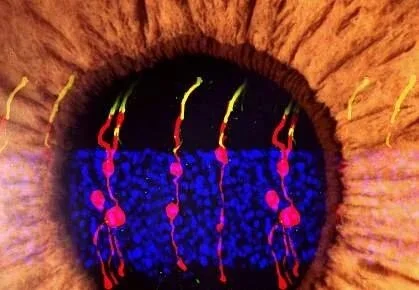
However, scientists found that they can directly reprogram stem cells to rapidly mature into photoreceptor cells by immersing them in an amalgamation of molecules that facilitate and expedite the development of the cells. Photoreceptor cells are the cells in our eyes that detect light, and one of the primary reasons behind a visual defect is the lack of photoreceptor cells. The photoreceptor cells were then transplanted into impaired mice eyes. To gauge the success of the experiment, the scientists analyzed the mice’s pupillary reflexes. These reflexes are an integral part of the process to determine the potential of this process since pupils will either contract or dilate depending on the amount of light the photoreceptor cells detect. If the photoreceptor cells are functioning as expected, then the pupils will constrict in high-light conditions and dilate in low-light conditions, indicating that the photoreceptors cells are recognizing the light.
Using this measurement technique, scientists determined that the transplantation of the photoreceptor cells was effective within one month. It was found that six out of the fourteen mice involved showed significant pupil constriction in the presence of light. Before the transplant, these mice suffered from severe retinal degeneration, with little chance of recovery on their own. Despite this, they responded well to the transplanted photoreceptors. The six mice that showed pupil constriction also displayed the effects of the transplant in their behavior. Scientists noticed that the six tended to show a preference for low light conditions, indicating that they could sense enough light to discriminate between the different light conditions.
In addition to the behavioral cues from the mice, scientists also determined the success of the experiment using gene expression profiling. This is a technique in which scientists measure which genes a cell is expressing at a given time. Gene expression revealing supported the success of the experiment because it showed that the gene expression within the transplanted photoreceptors was consistent with the expression of the endogenous photoreceptors.
Despite the small scale of the experiment performed, the outcome shows promise for the future. More research is needed in this area in order to increase the number of successful cell transplants in particular and successful outcomes in general. Further experiments and studies in direct cell reprogramming and photoreceptor transplant will be beneficial to this end.
Important information pertaining to the cellular mechanisms behind direct reprogramming was also worked out during this experiment. With this knowledge, other scientists can apply the same technique to a wide range of circumstances with cell types beyond photoreceptors. This kind of wide-reaching discovery is especially vital to scientific and medical progress, as it can advance many fields all at once. Given the success of this latest experiment, further studies in this area are sure to be soon in coming.
Source Credit: https://www.sciencedaily.com/releases/2020/04/200415133529.htm
Image Credit: https://www.nih.gov/sites/default/files/styles/floated_media_breakpoint-medium/public/news-events/research-matters/2018/20180911-photoreceptor.jpg?itok=WuZ5-O_m×tamp=1536605873
