
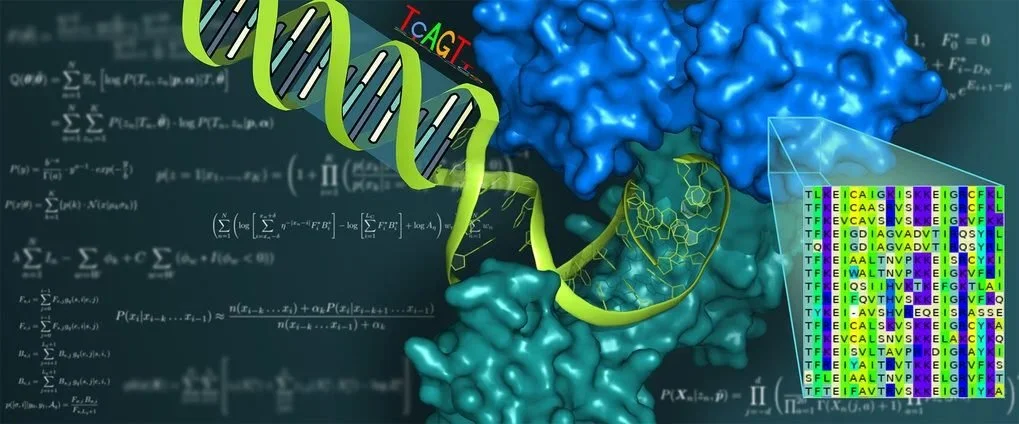
As technology continues to play a bigger role in our lives, more professionals are using coding and other tech tools to advance their field. Computation biology is one of the most popular examples of the intersection of biology and coding. According to the Britannica Encyclopedia, it is “a branch of biology involving the application of computers and computer science to the understanding and modeling of structures and processes of life” (Britannica). Most computational biologists are researchers in fields that demand the collection and extensive analysis of millions of data sets. Not surprisingly, the origin of computational biology is computer science; Alan Turing, the father of modern computing, “used early computers to implement a model of biological morphogenesis” and established the foundations of computation biology. Now, most computational biologists are involved in the biochemistry and molecular biology field, including genetics, immunology, and general molecular biology (amino acids/protein analysis, etc.)
Some computational biologists work with archeologists, historians, and anthropologists to map the molecular history of organisms throughout time. This includes humans! These practices can help us better understand migration patterns from millions of years ago, why some people from certain areas are more likely to have a certain gene or characteristic, and explains the outcome of the current population distribution. Others work to map the molecular (thus, the biological) history of other organisms, including bacteria, fungi, etc. Understanding the science behind the history and evolution of these microorganisms can help scientists better understand the origins of complex life on Earth, as well as explain the characteristics of modern vegetation and animals. Either way, computational biology is a rich field with lots of job opportunities that is applicable to a myriad of industries.
Depending on the field, most computational biologists have a compelling understanding of the field they work in and strong fundamental knowledge of coding, data science, and data analytics. Machine learning is a key component of computation biology because it can be used to model “sequences for purposes of pattern recognition to the analysis of high-dimensional (complex) data” (Britannica). Machine learning is connected to data science/analytics, as well as a subset of the artificial intelligence field. All three are interconnected and dependent on one another; a powerful combination of all of them can help scientists analyze massive amounts of data more effectively and efficiently. Mathematical modeling is another fundamental of computational biology; accurate models can help scientist better understand their results and data, as well as convey information to the public and other researchers. Robert F. Murphy, a computational biology department professor from the School of Computer Science at Carnegie Mellon University notes “[computational biology] seeks to build models for diverse types of experimental data” (CMU).
The biggest challenge that most computational biologist face is “converting” biomedical problems to computational problems, meaning, understanding how to utilize computer science and programming-related tools to solve problems related to biology. The key role of a computational biologist is to connect the two fields together: “this often means looking at biological system in a new way, challenging current assumptions or theories about the relationships between parts of the system, or integrating different sources of information to make a more comprehensive model than had been attempted before,” Murphy explains (CMU).
It is easy to confuse bioinformatics with computational biology, and both can be considered synonymous. However, “bioinformatics tends to refer to data management and analysis using tools that are aids in biological experimentation and to the interpretation of laboratory results” (Britannica). On the other hand, “computational biology typically is thought of as a branch of biology,” meaning computational biology involves a stronger foundation and research related to biology.
Technology will continue to evolve and improve all aspects of our lives. The field of biology is no exception. It is abundantly clear that computational biology will revolutionize how scientists conduct, analyze, interpret, and act on experiment data results.
Works Cited: https://www.britannica.com/science/computational-biology
http://www.cbd.cmu.edu/about-us/what-is-computational-biology/
Image Credit: https://www.mpibpc.mpg.de/14976608/header_image-1433920969.jpg
