
Introduction
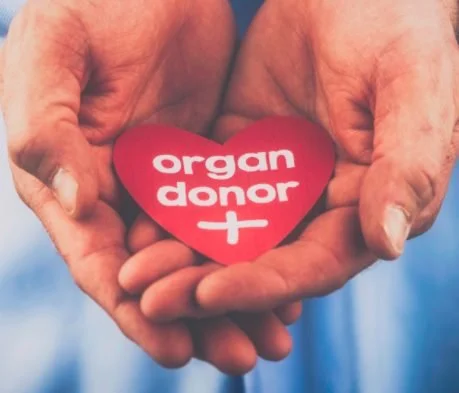
Transplants are one of the most popular major surgeries. From Grey’s Anatomy to biology class, organ donation and transplants are widely discussed. Although most people have heard of organ donation and transplantation, a majority of the public does not know the details of the process, or they are misinformed about what the process looks like. It is vital that the public understands the process, as this can boost the number of registered donors. In turn, this can save the lives of countless patients on the transplant waitlist. Education on donation is key to saving more lives via transplantation.
Organ Donors
There are two types of donors: living donors and deceased donors. Living donors can donate one of their kidneys or part of their liver (a split-liver transplant). Most donations from living donors are directed-donations, meaning the organ is donated so that it is transplanted to a specific pre-determined patient. News stories about parents or friends receiving an organ from a family member or friend are examples of living directed organ donations. In fact, Selena Gomez is the recipient of a kidney donated by her close friend!
Deceased donation usually involves a donor that is brain-dead, meaning sophisticated medical technology does not detect any brain wavelengths or activity. The donor’s consciousness no longer exists, and their body is dependent on mechanical life-support. Medical professionals request the consent of the donor family to donate organs, if the donor has not registered as an organ donor beforehand or are minors. It should be noted that saving the donor’s life is always prioritized first. Organ donation is not considered until medical professionals exhaust every resource trying to the donor’s one’s life. The common misconception that medical professionals do not try to save a potential donor’s life if they know they are an organ donor is simply not true (United Network of Organ Sharing). It is against the Hippocratic oath to “give up” (Donor Network West). If the donor family consents donation (or the donor has expressed their wishes to donate before-hand), medical professionals work with their local Organ Procurement Organization (OPO) and the United Network of Organ Sharing (UNOS) to match the donor with a patient on the transplant waitlist.
Patients on a Waitlist
Patients are placed on the waitlist for the specific life-saving organ they need. Then, based on the severity of need, patients are assigned various prioritizes. For example, the heart transplant waitlist has status 1A (the highest status requiring transplants most urgently), status 1B (also a very high status, but slightly less urgent than status 1A), and status 2 (the lowest status). Priority status is determined on a myriad of factors including physical and mental fitness, rate of health deterioration, etc. (United Network of Organ Sharing). Although patients on the transplant waitlist, regardless of the status, are very weak and dying, they must maintain a certain level of health to receive a transplant. Examples of fitness include being psychologically prepared to receive a transplant, not having an infectious disease at the time of transplant, etc. This ensures a high post-transplant survival rate. It should be noted that no patient on a transplant waitlist can survive without a life-saving organ transplant, regardless of their status and fitness to receive a transplant. It is their final and only option. Without a transplant, patients on the waitlist will die. In fact, 22 people die each day because the organ they need is not donated in time (Donor Network West)
The Matching Process
The medical data of an organ donor enters the donor data base only after the donor family provides consent (United Network of Organ Sharing). Organ donors and patients on the waitlist are matched on a variety of factors. This includes blood type, organ size (surgeons, for the most part, cannot transplant the organ of an adult in a child!), organ type, presence of HIV/other blood diseases (if applicable), survival benefit, medical urgency (based on the status of the patient on the waitlist), and distance from the donor hospital. An organ from New York cannot be transplanted to a recipient in California, because the organ is only viable for a specific amount of time outside the donor body (Donate Life America). This amount of time varies for different organs. As such, geography is pivotal. After the matching is confirmed and the organ recovery team and organ transplantation team coordinate with one another. UNOS and the local OPO play a key role in establishing the link of communication between both teams, because they inform the transplant team if, when, and where a potential donor is located. Without these organization, transplant teams would not know when they organs are available, and the recovery team would not know where to direct the donation.
The (General) Organ Recovery and Transplantation Process
After the matching is confirmed, patients on the transplant waitlist receive the glorious “call.” The transplant team contacts the patient to share the exciting news! The patient undergoes countless blood tests and medical exams, most of which vary depending on the organ they will receive. Medical professionals are moving as quickly as possible to prepare the future-recipient for the surgery. This process is known as “pre-op.” Simultaneously, medical professionals move rapidly to recover the organs from the donor. Quick procurement of organs allows more time for medical professionals to transport the organ. This is especially important to allocate time in case of unforeseen delays or setbacks when transporting organs. Ambulances and helicopters are involved, and a team of medical professionals are actively involved in ensuring the proper organ goes to the proper patient. Once the transplant team receives and verifies the organ, the patient receives a life-saving transplant. The amount of time each transplant takes varies on the organ. Throughout this process, the recipient and donor family receive regular updates from the medical team.
Registering as An Organ Donor!
August is National Minority Donor Awareness Month. Minorities are glaringly absent from the donor registrar; thus, it is crucial that they (along with everyone) registers as an organ donor. Each donor has the potential to save up to eight lives via organ transplant (lungs, heart, 2 kidneys, liver (goes to two people via split-liver transplant), pancreas, and intestines), give sight to two people via cornea transplant, and health up to 75 lives via tissue transplantation. If you are interested in learning more about organ donation and transplantation, check of the links under the “sources” section of this article, or email your questions to the author, Megan Mehta: (mehta.megan24@gmail.com). Megan is a heart transplant recipient, and she is more than happy to share her experiences and answer any questions! If you want to register as an organ donor, don’t go to the DMV! There are numerous ways to register including:
- Using the “Health” app on iPhones
- Online: https://registerme.org/register.aspx
o OR: https://www.donatelife.net/register/
- Via mail
- Over the phone
- At the DMV (before or after getting your license; If you register before, you will have a pink dot on your driver’s license showing your support!)
We recommend that you register online because it is easier, faster, most secure, and most safe during the COVID-19 pandemic.
Getting Involved with Organ Donation Advocacy Efforts
If you want to get involved in advocating for organ donation, consider volunteering for Donor Network West (the OPO for California and Nevada: https://www.donornetworkwest.org/volunteers/), or UNOS (https://unos.org/community/get-involved/ AND https://unos.org/community/unos-ambassadors/.
Conclusion
Register as an organ donor, debunk myths by discussing facts, start conversations with family and friends by explaining your decision to donate, and volunteer to help more people register! Although 95% of Americans support being a donor, only 58% are registered, so we could always use more help with registration drives (Donate Life America).
Works Cited:
Donate Life America. Statistics and Data. August 2020. 5 August 2020.
Donor Network West. Organ Donation Facts And Statistics. n.d. 5 August 2020.
https://www.donornetworkwest.org/organ-donation-facts-statistics/
United Network of Organ Sharing (UNOS). Transplant Trends: UNOS. 5 August 202. 5 August 2020.
https://unos.org/transplant/how-we-match-organs/
Image Credit:
http://www.medgurus.org/wp-content/uploads/2016/08/organ-donation-banner.jpeg
